










ESO Necromancer Tank Build – Overview
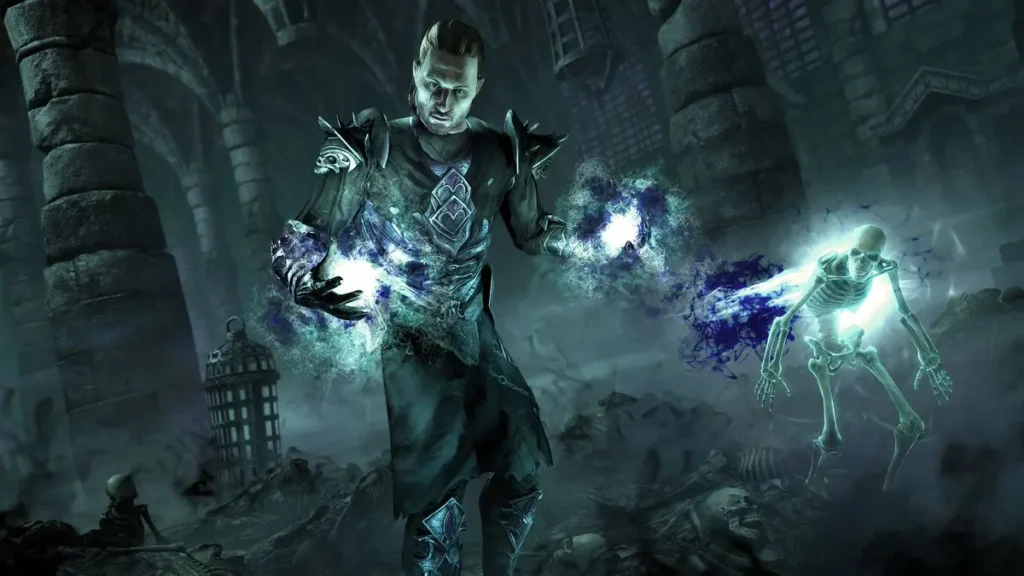
The Necromancer Tank has carved out a unique role in The Elder Scrolls Online, particularly in organised trial environments where Ultimate economy and sustained mitigation matter most. While not as universally flexible as other classes, the Necromancer brings a distinct toolkit built around corpse synergy, powerful debuffs, and exceptional resistance to damage-over-time effects.
In modern ESO, Necromancer Tanks excel as Off Tanks and in progression trial groups where consistent Warhorn uptime and DoT mitigation provide a real advantage. Their ability to generate Ultimate rapidly through class mechanics and corpse consumption allows them to influence group damage windows more frequently than most tank classes.
Necromancer tanking does demand more deliberate resource management. Sustain is less forgiving, self-healing requires proper positioning, and corpse control becomes part of your gameplay loop. However, when played correctly, the class rewards precision with powerful Ultimate cycling, strong debuff application, and reliable performance in the most demanding content.
This build focuses on maximising those strengths while smoothing out the sustain weaknesses, giving you a Necromancer Tank setup capable of handling both dungeons and high-end trial content in 2026.
Not sure if this is the right Tank for you?
Compare all ESO Tank builds and find the class that fits your playstyle and group role.
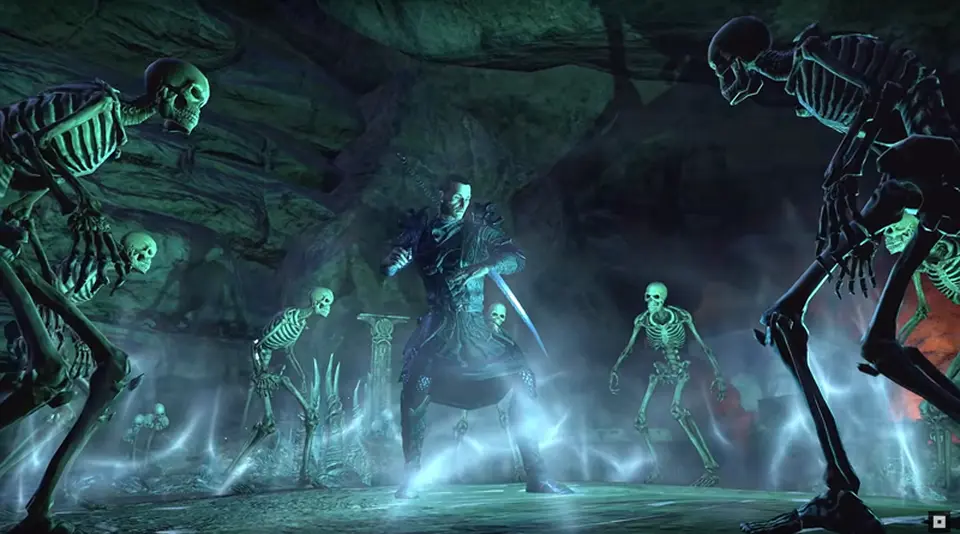
Why Play a Necromancer Tank in ESO?
Necromancer Tanks offer one of the most unique tanking identities in The Elder Scrolls Online. While other classes focus on passive sustain or raw mitigation, the Necromancer is built around Ultimate economy, corpse control, and damage-over-time resistance.
Where the Necromancer truly stands out is in organised group content. Its ability to generate Ultimate rapidly through corpse consumption and class passives allows for more frequent Warhorn usage or defensive ultimates during high-pressure phases. In coordinated trial groups, this can significantly increase group damage windows and overall stability.
Necromancers also perform exceptionally well in encounters with heavy sustained damage. Their resistance to damage-over-time effects makes them particularly strong in Veteran DLC and Hardmode content, where DoTs are often the primary threat to tanks.
However, Necromancer tanking requires intent. Sustain is less forgiving than Dragonknight, corpse management becomes part of your rotation, and positioning matters more when relying on melee-based healing. For players who enjoy active tanking and managing multiple systems at once, this creates a higher skill ceiling and a more engaging playstyle.
If you want a tank that rewards precision, amplifies group burst windows, and thrives in trial environments, the Necromancer is one of the most impactful choices in ESO.
Quick Build Snapshot
Build Focus: Dungeon Tanking & Trial Off Tank
Difficulty: Intermediate – High Skill Ceiling
Playstyle: Ultimate-Driven, Corpse Management, Debuff Control
Best Content: Veteran DLC Dungeons, Trials, Hardmodes
Patch: Update 49 (2026)
What This Necromancer Tank Build Covers
This guide breaks down everything you need to play a Necromancer Tank effectively in modern ESO:
- Why Necromancers excel in organised dungeon and trial content
- How Ultimate generation and corpse synergy define the class
- Recommended race, Mundus, food, and stat priorities
- Gear setups for dungeons, trials, and Ultimate-focused variants
- Subclassing and scribing options to maximise survivability and Warhorn uptime
- Multiple build variations, including the high-ultimate “Souleater” setup
Whether you’re stepping into Veteran DLC dungeons or pushing Hardmode trials, this build is designed to help you understand the strengths of the class and apply them with intent.
Who This Build Is For
This build is ideal for players who enjoy an active, resource-aware tanking style and want to maximise group impact through Ultimate cycling, corpse management, and debuff control. It suits organised dungeon groups and trial environments where coordinated burst windows matter.
Who This Build Is Not For
If you’re looking for the most forgiving or beginner-friendly tank class, or prefer passive sustain with minimal corpse interaction, Necromancer may feel demanding. This build rewards deliberate play and proper resource management.
Necromancer Tank Strengths, Weaknesses & Group Benefits
Strengths
- Exceptional Ultimate generation when corpses are available
- Strongest class for Ultimate cycling in organised groups
- Access to Major Vulnerability through Colossus
- Excellent resistance to sustained damage-over-time pressure
- Reanimate provides powerful fight recovery in progression scenarios
- High impact in trial environments where coordinated burst windows matter
Weaknesses
- More complex playstyle requiring corpse management and positioning
- Sustain is less forgiving than Dragonknight or Arcanist
- Relies heavily on group coordination to maximise Ultimate value
- Fewer passive, always-on group buffs compared to some other tank classes
- Self-healing can feel weaker during transitional or low-corpse encounters
Group Benefits
- Colossus – Major Vulnerability
- Empowering Grasp – Major Maim & Empower
- Bone Totem – AoE Major Cowardice, Minor Protection & Group Synergy
- Unnerving Boneyard – AoE Major Breach, Minor Vulnerability & Group Synergy
- Ruinous Scythe – Hemorrhaging Status & Off Balance
- Reanimate – Resurrect 3 allies
- Spirit Mender – Heals lowest health ally
Necromancer Tank Core Essentials
If you’re unsure, start with Nord, Atronach, Red Frothgar, Tri-Stat potions, and 64 Health, this setup works everywhere.
Attributes
- 64 Health
Mundus Stone
The Atronach Mundus Stone provides the most reliable value for Necromancer tanking by increasing Magicka Recovery. Maintaining skill uptime is one of the biggest challenges for Necromancers, especially in longer pulls and sustained boss fights, and additional Magicka Recovery allows you to cast key abilities consistently without over-relying on heavy attacks.
Food Choices
Red Frothgar is the strongest all-round Necromancer tank food, offering increased Max Health alongside Magicka Recovery. This combination provides the most consistent survivability and skill uptime across all content types.
Smoked Bear Haunch, or the cheaper alternative Jewels of Misrule, trades some Max Health and Magicka Recovery compared to Red Frothgar, for additional Health and Stamina Recovery. These options are best suited to experienced tanks who block less frequently and are comfortable managing incoming damage.
Bewitched Sugar Skulls can be used situationally when additional Max Resources are needed, but it is generally less efficient for tanking compared to recovery-focused foods.
Potions
The standard potion choice for tanking is Essence of Health (Tri-Stat) Potions, which restore all three resources and provide increased recovery across the board. These are reliable, flexible, and work well for every class.
Minor Heroism Potions are a strong alternative for experienced tanks, providing additional Ultimate generation. These are particularly valuable in organised groups or speed-focused runs where frequent Ultimate usage improves group damage or survivability.
Race Selection
Nord remains the strongest overall race for Necromancer tanking due to its bonus resistances, Max Stamina, and increased Ultimate generation. The additional Ultimate gain aligns perfectly with the class’s identity and strengthens both defensive and offensive Ultimate cycling.
Other races can work, but Nord offers the most consistent performance across dungeon and trial content.
Attributes
Placing 64 points into Health is the most consistent and reliable choice for Necromancer tanking. This establishes a strong survivability baseline while allowing Stamina and Magicka to be managed through gear, food, and recovery.
Stats to Aim For (Fully Buffed)
~40,000 Health
Improves survivability, makes mechanics more forgiving, and reduces the risk of sudden deaths during unblocked damage or DoT pressure.
Lower values are viable in easier content, but Veteran DLC and Hardmode encounters benefit greatly from higher Health pools.
~20,000 Stamina
Stamina controls blocking, dodging, and break free. Around 20k is a comfortable baseline. More experienced tanks may run slightly less if sustain tools and block efficiency are strong.
~15,000 Magicka
Magicka fuels the majority of Necromancer tank skills. Around 15k is sufficient, as sustained casting is driven by recovery rather than stacking Max Magicka. Excessive Magicka investment offers diminishing returns.
25k–33k Resistances
Resistances reduce incoming direct and damage-over-time effects. The cap is 33,100, but full cap is not always necessary.
- Base game content: Resistances are less critical
- Veteran & DLC: Aim for 25k+
- DLC Hardmode: Aim for 30k+
Keep in mind that heavy blocking reduces the relative value of resistances. They matter most when taking unblocked hits or sustained DoT damage.
~2,000 Magicka Recovery
To maintain consistent uptime on debuffs, corpse generation tools, and defensive abilities, Necromancer tanks should aim for around 2,000 Magicka Recovery. Dropping too low on recovery will noticeably impact ability uptimes.
Necromancer Tank Gear Setups
| Piece | Set | Weight | Trait | Enchantment |
|---|---|---|---|---|
| Head | Archdruid / Magma Incarnate | Medium | Divines | Prismatic Defence |
| Shoulder | Archdruid / Spaulder of Ruin | Light | Divines | Prismatic Defence |
| Chest | Turning Tide | Heavy | Divines | Prismatic Defence |
| Hands | Turning Tide | Heavy | Divines | Prismatic Defence |
| Waist | Turning Tide | Heavy | Divines | Prismatic Defence |
| Legs | Turning Tide | Heavy | Divines | Prismatic Defence |
| Feet | Turning Tide | Heavy | Divines | Prismatic Defence |
| Necklace | Saxhleel Champion | Jewellery | Harmony/Infused | Magicka Recovery |
| Ring | Saxhleel Champion | Jewellery | Harmony/Infused | Magicka Recovery |
| Ring | Saxhleel Champion | Jewellery | Harmony/Infused | Magicka Recovery |
| Main Hand | Void Bash / Trainee | Any 1H | Decisive | Hardening |
| Off Hand | Void Bash / Trainee | Shield | Divines | Prismatic Defence |
| Main Hand Backup | Saxhleel Champion | Ice Staff | Infused & Charged | Crusher |
| Piece | Set | Weight | Trait | Enchantment |
|---|---|---|---|---|
| Head | Nazaray | Medium | Divines/Sturdy | Prismatic Defence |
| Shoulder | Nazaray | Light | Divines/Sturdy | Prismatic Defence |
| Chest | Lucent Echoes | Heavy | Divines/Sturdy | Prismatic Defence |
| Hands | Lucent Echoes | Heavy | Divines/Sturdy | Prismatic Defence |
| Waist | Lucent Echoes | Heavy | Divines/Sturdy | Prismatic Defence |
| Legs | Lucent Echoes | Heavy | Divines/Sturdy | Prismatic Defence |
| Feet | Lucent Echoes | Heavy | Divines/Sturdy | Prismatic Defence |
| Necklace | Saxhleel Champion | Jewellery | Harmony/Infused | Magicka Recovery |
| Ring | Saxhleel Champion | Jewellery | Harmony/Infused | Magicka Recovery |
| Ring | Saxhleel Champion | Jewellery | Harmony/Infused | Magicka Recovery |
| Main Hand | Saxhleel Champion | Any 1H | Decisive | Hardening |
| Off Hand | Saxhleel Champion | Shield | Divines/Sturdy | Prismatic Defence |
| Main Hand Backup | Saxhleel Champion | Ice Staff | Infused | Crusher |
| Piece | Set | Weight | Trait | Enchantment |
|---|---|---|---|---|
| Head | Baron Zaudrus / Archdruid Devyric | Medium | Divines/Sturdy | Prismatic Defence |
| Shoulder | Baron Zaudrus / Archdruid Devyric | Light | Divines/Sturdy | Prismatic Defence |
| Chest | Pearlescent Ward | Heavy | Divines/Sturdy | Prismatic Defence |
| Hands | Pearlescent Ward | Heavy | Divines/Sturdy | Prismatic Defence |
| Waist | Pearlescent Ward | Heavy | Divines/Sturdy | Prismatic Defence |
| Legs | Pearlescent Ward | Heavy | Divines/Sturdy | Prismatic Defence |
| Feet | Pearlescent Ward | Heavy | Divines/Sturdy | Prismatic Defence |
| Necklace | Powerful Assault | Jewellery | Harmony/Infused | Prismatic Cost Reduction |
| Ring | Powerful Assault | Jewellery | Harmony/Infused | Prismatic Cost Reduction |
| Ring | Powerful Assault | Jewellery | Harmony/Infused | Prismatic Cost Reduction |
| Main Hand | Trainee | Any 1H | Decisive | Hardening |
| Off Hand | Trainee | Shield | Divines/Sturdy | Prismatic Defence |
| Main Hand Backup | Powerful Assault | Ice Staff | Infused | Crusher |
Default Recommendation:
If you prefer a single, reliable setup, use the Dungeon gear configuration. It offers strong group utility, consistent survivability, and adapts well to both dungeon and trial environments.
For a full breakdown of tank gear in The Elder Scrolls Online, including traits, enchantments, and optimisation strategies, see the ESO Tank Gear Guide.
Gear Information
Armor Traits
- Divines – Default choice for improved Magicka Recovery
- Reinforced – Useful in difficult Veteran Hardmodes if resistance cap is hard to reach
- Sturdy – Viable for tanks with strong sustain or heavy block usage
Jewellery
- Harmony + Magicka Recovery – Best overall performance
- Prismatic Cost Reduction – Useful for Stamina-heavy setups
- Infused – Strong when synergies are less frequent
- Swift – Situationally valuable for add pulls when using gear-swap addons
Weapons
- One-Hand & Shield
- Decisive + Hardening – Strong all-round option
- Infused + Weakening – Ideal when running without a healer
- Absorb Stamina – Adds minor sustain when needed
- Ice Staff
- Charged – Best for add pulls, reliably applying Chilled
- Infused + Crusher – Mandatory for bosses to maintain maximum debuff uptime
Dungeon
Monster Sets
Archdruid Devyric is one of the strongest monster sets for dungeon tanking, providing excellent Major Vulnerability uptime, especially when paired with Turning Tide. This combination is particularly effective on bosses. For add pulls, Archdruid is less impactful, making Spaulder of Ruin a better option for consistent group damage. Tremorscale is another strong alternative, especially in groups that benefit from additional armor reduction.
5 Piece Sets
Turning Tide is a core set, greatly improving Major Vulnerability uptime and group DPS. Paired with Saxhleel Champion which grants Major Force regardless of which Ultimate is used and scales naturally with Ultimate uptime, allowing tanks to align their ultimates with high-damage windows for maximum group DPS. Alternatively you could use Powerful Assault, Olorime or War Machine.
Weapon Sets
For add pulls, Void Bash (Vateshran One-Hand and Shield) is best-in-slot, allowing you to stack entire packs with a single cast. For boss fights or encounters with minimal adds, equipping 2 Pieces of the Trainee set just adds some extra Max Health and Magicka.
Trials Main Tank
Monster Set — Nazaray
Nazaray is taken for one job: extending your Major and Minor debuffs on enemies. As the Main Tank, you’re constantly applying key debuffs and standing closest to the boss. Nazaray helps keep those debuff windows active for longer, allowing the group to benefit more consistently during burn phases.
5-Piece Set — Saxhleel Champion
Saxhleel Champion is what makes this setup Main Tank-proof in real trial scenarios. It allows you to provide Major Force even when you’re not using Warhorn meaning you can run a safety Ultimate like Barrier (or other defensive Ultimates depending on class or encounter) without sacrificing a massive portion of group damage.
5-Piece Set — Lucent Echoes
Lucent Echoes adds two things that matter in trials: increased Critical Damage and Critical Healing for the group, and a very real layer of survivability for the Main Tank when pressure spikes. The below-50% health damage reduction effect is exactly the kind of “you’re about to die” buffer that saves pulls when mechanics overlap or mistakes happen.
Trials Off Tank
Monster Set — Baron Zaudrus
Baron Zaudrus provides extremely strong Ultimate generation when combined with Off Tank passives and skills. Activated by simply casting Elemental Susceptibility, this allows near-constant Ultimate usage, which is especially valuable in groups relying on frequent Major Force, Charged Atronach, or Colossus rotations.
In organised trial environments, the ability to generate Ultimates consistently can significantly increase overall group damage.
Monster Set — Archdruid Devyric
Archdruid Devyric offers Major Vulnerability, making it a strong option when the group lacks consistent Colossus uptime. The Off Tank is often well-positioned to apply this debuff during add waves or boss phases.
It requires a fully charged Heavy Attack to activate, which can be situationally risky, but when executed reliably it provides strong group damage amplification.
5-Piece Set — Pearlescent Ward
Pearlescent Ward provides a unique Weapon and Spell Damage buff to the group while also acting as a progression stabiliser. As group members fall, surviving players gain increasing damage reduction, helping prevent full wipes during recovery phases.
This makes it one of the strongest Off Tank sets for both damage amplification and run-saving survivability, particularly in progression or hardmode trials.
5-Piece Set — Powerful Assault
Powerful Assault provides another unique Weapon and Spell Damage group buff. However, it has limited range and requires consistent micromanagement to maintain uptime.
Off Tanks running Powerful Assault must reposition into the group regularly to refresh the buff, making it more demanding but highly rewarding in coordinated trial groups.
Subclassing for Necromancer Tanks
Subclassing allows the Necromancer to replace one or two of its less tank-focused skill lines with stronger defensive or group-support alternatives. The Necromancer’s core tanking identity sits firmly within Bone Tyrant, which provides its strongest passives and primary defensive tools.
Grave Lord is often taken purely for the Colossus Ultimate, while the remaining skill line can be swapped depending on content and group needs.
Because Necromancer does not naturally provide as many passive group buffs as some other classes, subclassing plays a major role in strengthening its overall utility.
Dungeon-Focused Subclassing
In dungeon content, Necromancers commonly benefit from:
- Arcanist – Soldier of Apocrypha: Adds a strong defensive backbone with increased resistances, recovery, layered mitigation, and Minor Evasion. This makes dungeon tanking feel significantly smoother and more stable.
- Warden – Winter’s Embrace: Provides Major Resolve to the group, applies Major Maim automatically, and adds block mitigation and defensive passives. Since other roles rarely use this line, it fits naturally into the tank role.
These combinations enhance survivability and reduce pressure in unpredictable 4-player content.
Trial Off Tank Subclassing
In organised trials, Necromancers are often positioned as Off Tanks, where their role shifts toward utility and Ultimate cycling. In these situations, stronger synergy comes from:
- Sorcerer – Daedric Summoning: Access to a Major Berserk Ultimate option, strong damage shields, reduced Ultimate cost, and incoming damage reduction.
- Nightblade – Siphoning: Increased Max Resources and additional Ultimate generation through potion synergy, supporting an Ultimate-driven playstyle.
- Templar – Restoring Light: Provides group healing, a cleanse synergy, and additional Ultimate support, offering a utility-focused alternative for coordinated groups.
These lines reinforce Necromancer’s strength as an Ultimate-focused Off Tank while compensating for its lack of passive group buffs.
Situational Alternative
- Dragonknight – Earthen Heart: Adds strong sustain tools and group utility. While not mandatory, it remains one of the most efficient support lines in organised trial environments.
Skills for Necromancer Tanks
Necromancer Skills


Bosses


Adds


Bone Tyrant • Soldier of Apocrypha • Winters Embrace


Bone Tyrant • Daedric Summoning • Siphoning


Necromancer Passives
- Grave Lord: Reusable Parts
- Bone Tyrant: Death Gleaning, Disdain Harm, Health Avarice, Last Grasp
- Living Death: Curative Curse, Near-Death Experience, Corpse Consumption, Undead Confederate
- One Hand and Shield: Fortress, Sword and Board, Deadly Bash, Deflect Bolts, Battlefield Mobility
- Destruction Staff: Elemental Force, Ancient Knowledge, Destruction Expert
- Light Armor: Light Armor Bonuses, Light Armor Penalties
Grace, Evocation, Spell Warding - Medium Armor: Medium Armor Bonuses
Dexterity, Wind Walker, Athletics - Heavy Armor: Heavy Armor Bonuses, Heavy Armor Penalties
Resolve, Constitution, Juggernaut, Revitalize, Rapid Mending. - Fighters Guild: Intimidating Presence
- Mages Guild: Mage Adept, Everlasting Magic, Magicka Controller
- Undaunted: Banish the Wicked, Undaunted Mettle
- Support: Magicka Aid
- Racial: All
- Alchemy: Medicinal Use
Subclassing
- Arcanist Solider of Apocrypha: Aegis of the Unseen, Wellspring of the Abyss, Circumvented Fate, Implacable Outcome
- Warden Winters Embrace: Glacial Presence, Frozen Armor, Icy Aura, Piercing Cold
- Dragonknight Ardent Flame: Combustion, Warmth, Searing Heat, World in Ruin
- Dragonknight Earthen Heart: Eternal Mountain, Battle Roar, Mountain’s Blessing, Helping Hands
- Nightblade Siphoning: Catalyst, Magicka Flood, Soul Siphoner, Transfer
- Templar Restoring Light: Mending, Sacred Ground, Light Weaver, Master Ritualist
Skill Information
Below is a reference breakdown of commonly used Necromancer tank skills. You don’t need every skill listed here on your bar at once, use this section to understand what each option provides and when it becomes useful.
- Goading Throw – Ranged taunt that also heals you and applies Major Maim, reducing enemy damage.
- Necrotic Potency – Consumes nearby corpses to generate Ultimate and a heal over time for each corpse consumed. While slotted, it also reduces damage taken.
- Warding Burst – Group damage shield that also grants Minor Courage and contributes to ultimate generation.
- Polar Wind – Strong burst heal with a self HoT that also heals an ally.
- Trample – Grants Major Heroism and applies multiple damage status effects, turning the Dragonknight into an ultimate engine when paired with Saxhleel Champion.
- Gibbering Shelter – Emergency defensive ultimate that provides strong mitigation, group shielding, and passive resource recovery.
- Leashing Soul – Pulls enemies together, restores Magicka and Stamina, and applies Major Cowardice to reduce incoming damage.
- Elemental Susceptibility – Free Major Breach with constant Burning, Chilled, and Concussion procs, enabling Minor Maim, Minor Brittle, Minor Vulnerability, Off Balance, and Minor Breach (with Blockade), while triggering Dragonknight sustain through Burning.
- Elemental Blockade – Maintains continuous infused Crusher enchant uptime, applies Minor Breach to Chilled enemies, and provides a projectile damage shield for the group.
- Expansive Frost Cloak – Grants Major Resolve to the entire group.
- Runeguard of Still Waters – Passive safety tool that grants Minor Resolve and Minor Protection, immobilises nearby enemies, and triggers a heal when under 50% Health.
- Replenishing Barrier – Provides a large group and self damage shield, restores Magicka, triggers Major Force when paired with Saxhleel Champion, and grants 10% increased Magicka Recovery from the Magicka Aid passive.
Add Pull Skills
- Inner Rage – Ranged taunt that provides a strong group synergy, dealing Flame damage over time to the taunted enemy and additional AoE Flame damage to nearby enemies.
- Razor Caltrops – Applies AoE Major Breach to all enemies in large pulls and snares them.
- Power Slam – Used to proc Void Bash, pulling all enemies together in one cast while applying Major Maim to reduce incoming damage.
- Pulsar – Applies AoE Minor Mangle and, when used with a Charged Ice Staff, guarantees AoE Chilled, enabling Minor Maim, Minor Brittle, Minor Breach (with Blockade), and granting Minor Protection to the group.
Necromancer Skills (No Subclassing)
- Hungry Scythe – Primary Necromancer heal that damages enemies in an AoE while healing you. Both the initial heal and heal over time scale with Max Health.
- Summoner’s Armor – Grants Major and Minor Resolve, reduces the cost of summoning abilities, generates a corpse that can be consumed by Necrotic Potency, and must be kept active to maintain Disdain Harm passive for 15% reduced damage taken from damage over time effects.
- Spirit Guardian – Heals you or the lowest Health ally over time, transfers 10% of your damage taken to the spirit, generates a corpse when it expires, increases recovery, and boosts critical healing chance based on missing Health through passives.
- Glacial Colossus – Powerful ultimate that applies AoE Major Vulnerability, increasing damage taken by enemies and significantly boosting group DPS.
- Binding Contingency – Provides a reliable AoE immobilise for add pulls and applies AoE Minor Vulnerability to enemies.
Key Scribed Skills for ESO Necromancer Tanks
Scribing allows Necromancer Tanks to fill gaps in their base toolkit, particularly in areas like ranged taunts, crowd control, group utility, and Ultimate generation. While the Necromancer class script increases Max stats based on nearby corpses, this is generally less valuable for tanks, as corpses are often better reserved for Necrotic Potency and other class tools.
Below are the most effective scribed options for dungeon and trial tanking.
- Wield Soul
- Pull
- Druid’s Resurgence
- Cowardice
A highly efficient multi-purpose skill. Primarily used to chain in smaller adds while applying a taunt, it also functions as a strong sustain tool by restoring both Magicka and Stamina when cast. When used on bosses, it applies Major Cowardice, reducing enemy damage output.
- Shield Throw
- Taunt
- Sage’s Remedy
- Maim
A compact ranged taunt that scales with Max Health to provide a self-heal. It also applies Major Maim, reducing boss damage dealt. With Major and Minor Breach typically covered elsewhere, this skill allows you to replace traditional options like Pierce Armor or Frost Clench with a more efficient multi-use alternative.
- Trample
- Frost Damage
- Assassin’s Misery
- Heroism
Primarily used for Major Heroism, significantly increasing Ultimate generation. The added Frost Damage helps maintain Chilled on enemies, contributing to Minor Brittle and related debuffs, while Assassin’s Misery increases status effect application.
- Soul Burst
- Damage Shield
- Anchorite’s Potency
- Courage
Provides a Max Health-scaling group damage shield while granting Minor Courage, increasing group Weapon and Spell Damage. It also consumes a Soul Gem every five seconds to generate additional Ultimate, making it an extremely strong option in Ultimate-driven trial compositions.
- Ulfsild’s Contingency
- Immobilize
- Growing Impact
- Vulnerability
Provides reliable crowd control through immobilisation while applying an AoE Vulnerability debuff to increase group damage during add pulls.
- Ulfsild’s Contingency
- Damage Shield
- Gladiator’s Tenacity
- Intellect and Endurance
Provides a Max Health-scaling group damage shield while granting Minor Intellect and Minor Endurance for improved sustain. For the Main Tank, it also grants an additional 8% damage reduction, making it both a group utility tool and a personal survivability boost.
ESO Necromancer Tank Other Skills & Passives
Grave Lord
Frozen Colossus
(Vital)
This Ultimate is a primary reason for using a Necro Tank, as it provides Major Vulnerability to your group. While not as crucial due to sets like Turning Tide and Archdruid Devyric, using Necros with Colossus allows for different gear sets. This morph is preferred for its longer duration.
Flame Skull
(Not Needed)
Blighted Blastbones → Morph of Sacrificial Bones
(Situational)
Use this skill for “farming” corpses. Due to changes to Stalking Blastbones, this morph must be used, despite its Stamina cost. It creates a corpse that can be absorbed with Necrotic Potency, accelerating Ultimate generation. This is crucial for setups focused on rapid Ultimate gain.
Avid Boneyard → Morph of Boneyard
(Situational)
This morph creates a synergy that you can use yourself, making it beneficial if you need to be able to do this.
Unnerving Boneyard → Morph of Boneyard
(Vital)
This morph applies Major Breach and Minor Vulnerability as an AoE and provides a group synergy that damages enemies. It’s ideal for trash fights.
Skeletal Mage
(Situational)
Used similarly to Blastbones for creating corpses to absorb with Necrotic Potency, speeding up Ultimate gain. Either morph can be used. Provides additional DPS, useful for a hybrid setup. Casting it halfway through its duration generates a corpse without waiting for it to die.
Mystic Siphon → Morph of Mystic Siphon
(Situational)
Provides additional recovery but may be considered a wasted skill slot for just 150 of each recovery. Can be used with Elemental Catalyst as a source of Shock Damage, though using EC is generally not advised for a Tank.
Reusable Parts
(Situational)
This passive in the Grave Lord skill line is useful for Tanks only if you’re using Blastbones, Spirit Mender, or Skeletal Mage. The 50% cost reduction provides significant sustain savings.
Death Knell, Dismember & Rapid Rot
(All Unnecessary)
These passives are damage-focused and not essential for tanking. However, if you have spare skill points, pick them up for a small damage increase.
Bone Tyrant
Bone Goliath Transformation
(Unnecessary)
Primarily a PvP skill, it’s not typically used in PvE. In desperate situations, it could be used, but Colossus, Aggressive Horn, Barrier or Renewing Animation are better options for PvE.
Hungry Scythe → Morph of Death Scythe
(Vital)
This is the Necro Tank’s main heal. It’s a Magicka damage ability that heals based on the number of targets hit and provides a heal over time, scaling with Max Health. It offers a large heal when dealing with multiple targets. However, you must hit a target to get healed, which can be challenging in transitional fights or when out of range.
Ruinous Scythe → Morph of Death Scythe
(Optional)
This is the Stamina morph and is generally not used. It offers a potential group buff with Off Balance, but it’s only worth considering if your damage dealers use the Exploiter Champion Point passive. Otherwise, it’s not worth using.
Beckoning Armor → Morph of Bone Armor
(Vital)
This armor buff grants Major and Minor Resolve and pulls in one ranged enemy attacking you every 2 seconds, applying a 15-second taunt if they aren’t already taunted. You can pull in enemies faster by recasting the ability, resetting the pull-in timer to every second. While not as reliable as instant pull abilities and utilizing sets like Void Bash is superior, this skill works well for pulling enemies that Void Bash misses.
Summoner’s Armor → Morph of Bone Armor
(Situational)
This morph is useful for gaining Ultimate faster by summoning and absorbing corpses. It reduces the cost of your summoning skills and allows you to “consume” it every 10 seconds with Necrotic Potency. It won’t pull or taunt enemies but still provides Major and Minor Resolve.
Necrotic Potency → Morph of Bitter Harvest
(Vital)
This skill is excellent for a tank, providing healing, damage reduction, and 6 Ultimate per corpse consumed. It’s especially useful in 4-player content with many adds and in trials with numerous add phases, allowing for frequent Ultimate use. You can enhance its effectiveness by slotting summoning skills to create and absorb corpses, gaining substantial Ultimate in almost any fight. The other morph, Deaden Pain, is less valuable since Revealing Flare offers more consistent Major Protection if needed.
Agony Totem → Morph of Bone Totem
(Useful)
This skill aids in add control and provides a beneficial group synergy. It grants Minor Protection to the group and applies an AoE Major Cowardice debuff, decreasing enemies Weapon and Spell damage. The crowd control effect is Fear, which means it won’t affect pulled or chained enemies, making it less useful than an immobilization.
Empowering Grasp → Morph of Grave Grasp
(Optional)
Previously a key reason for using a Necro Tank in group content, but less useful now due to changes to Empower. It summons 3 patches of skeletal claws in front of you, snaring, applying Minor Maim, and immobilizing enemies. This crowd control is limited, as it only affects a narrow area in front of the caster. It also grants Empower to up to 6 group members standing in the patches, but this now buffs heavy attacks, making it generally less effective since the highest DPS comes from light attacks.
Death Gleaning
(Vital)
A very useful sustain passive that benefits you just by being near enemies.
Disdain Harm
(Vital)
Essential for DoT-heavy fights. This passive significantly reduces DoT damage, making Necro Tanks unmatched in this regard and a top choice for the hardest content.
Health Avarice
(Vital)
With at least one Bone Tyrant skill slotted, and often multiple, this passive provides a healing boost.
Last Gasp
(Vital)
Increases Max Health, making it easier to reach the necessary levels for comfortably surviving as a tank.
Living Death
Renewing Animation → Morph of Reanimate
(Optional)
This skill is useful for tanking in progression or pick-up groups, allowing you to quickly resurrect up to 3 players. It also activates the Near-Death Experience passive, enhancing self-healing in high-damage situations. It’s effective in both dungeon content, where you can revive your entire group, and in trials, where it can prevent wipes and allow the fight to continue.
Render Flesh
(Not Needed)
Expunge
(Optional)
Purges negative effects from you. The Expunge and Modify morph grants resources each time you remove negative effects, while Hexproof removes more negative effects. Both morphs reduce ability cost when slotted. This skill is useful in purge and sustain-heavy fights but is generally not prioritized over Efficient Purge, which also assists the group.
Life amid Death
(Not Needed)
Spirit Guardian → Morph of Spirit Mender
(Vital)
This heal-over-time ability also takes 10% of your incoming damage which includes damage over time (DoTs). While it can heal other players, making it unreliable for self-healing unless you are away from the group or consistently the lowest health, it is still worth using. It links to the player with the lowest health, helping to keep them alive. It is most useful in high-damage situations, transferring some damage off you onto the spirit, which can absorb up to 30,000 damage. Additionally, it increases Magicka Recovery through the Undead Confederate passive and provides an extra corpse for Necrotic Potency.
Mortal Coil → Morph of Restoring Tether
(Optional)
Use this on a corpse to heal yourself and allies. While the heal isn’t significant for a tank, it restores Magicka and Stamina every 2 seconds, providing a bit of extra sustain. It also offers a slight increase in healing done. If you have sustain issues on a Necro Tank, this might help, but it may not be strong enough to justify taking up a skill slot.
Curative Curse
(Vital)
This passive increases healing done when you have a negative effect on you, which is common in many PvE situations.
Near-Death Experience
(Vital)
Requires a Living Death ability slotted. It increases critical healing based on how low your health is, potentially saving your life in critical moments.
Corpse Consumption
(Vital)
Despite its long cooldown, this passive is crucial for additional Ultimate generation, especially effective when used with Necrotic Potency.
Undead Confederate
(Vital)
Necro Tanks benefit greatly from summoning, particularly Spirit Guardian. This passive increases Magicka Recovery, and also boosts Stamina and Health recovery, enhancing sustain.
Champion Points for ESO Necromancer Tanks
- Ironclad
- Duelist’s Rebuff
- Bulwark
- Enduring Resolve (DoT damage fights)
- Unassailable (AoE damage fights)
You’ll typically flex between Enduring Resolve and Unassailable depending on the encounter.
- Boundless Vitality
- Fortified
- Rejuvenation
- Bracing Anchor (Boss Fights)
- Celerity (Add Pulls)
- Shield Master (Reduced cost of Barrier Ultimate)
Souleater – Ultimate Engine Necromancer Tank
Souleater is a high–Ultimate generation Necromancer Tank variant built for fun, aggressive Warhorn uptime, and dungeon-focused gameplay. This is not a meta progression build and is not recommended for Veteran Trial optimisation.
Instead, Souleater shines in: veteran dungeons, arenas, normal trials and coordinated casual groups.
It trades some defensive consistency for extremely high Ultimate cycling and group damage windows.
Souleater Gear
| Piece | Set | Weight | Trait | Enchantment |
|---|---|---|---|---|
| Head | Baron Zaudrus | Medium | Divines | Prismatic Defence |
| Shoulder | Baron Zaudrus | Light | Divines | Prismatic Defence |
| Chest | Arkasis’s Genius | Heavy | Divines | Prismatic Defence |
| Hands | Arkasis’s Genius | Heavy | Divines | Prismatic Defence |
| Waist | Arkasis’s Genius | Heavy | Divines | Prismatic Defence |
| Legs | Arkasis’s Genius | Heavy | Divines | Prismatic Defence |
| Feet | Arkasis’s Genius | Heavy | Divines | Prismatic Defence |
| Necklace | Hide of the Werewolf | Jewellery | Infused | Potion Cooldown |
| Ring | Hide of the Werewolf | Jewellery | Harmony | Potion Cooldown |
| Ring | Hide of the Werewolf | Jewellery | Harmony | Magicka Recovery |
| Main Hand | Hide of the Werewolf | Any 1H | Decisive | Hardening |
| Off Hand | Hide of the Werewolf | Shield | Divines | Prismatic Defence |
| Main Hand Backup | Hide of the Werewolf | Ice Staff | Infused | Crusher |
Souleater Skills


How To Play The Souleater Build
Souleater is an Ultimate engine built from stacked sources that all feed into each other:
Gear sources
- Baron Zaudrus generates Ultimate through frequent status effect application or by simply spamming Elemental Susceptibility.
- Arkasis’s Genius adds a large Ultimate spike whenever you drink a potion, and potion cooldown enchants help you line potion usage up cleanly with Arkasis’ internal cooldown.
- Hide of the Werewolf adds steady Ultimate simply from taking damage during real fights.
Subclass passive sources
- Nightblade – Siphoning (Catalyst) adds additional Ultimate every time you drink a potion, stacking perfectly with Arkasis. Make this a Heroism Potion to also gain Minor Heroism.
- Nightblade – Siphoning (Transfer) adds further Ultimate gain just from casting Siphoning abilities during combat, which fits naturally into your rotation via skills like Siphoning Attacks.
- Dragonknight – Earthen Heart (Mountain’s Blessing) adds extra Ultimate generation when you cast Earthen Heart abilities, meaning Igneous Shield becomes part of your Ultimate engine rather than “just a shield”.
- Dragonknight – Earthen Heart (Battle Roar) refunds resources when you cast an Ultimate, which helps stabilise sustain because this build is designed to Ultimate constantly.
Skill sources
- Chilling Trample (Major Heroism) adds consistent passive Ultimate generation while also doubling as mobility/control value.
- Warding Burst converts Soul Gems into additional Ultimate, which is why it becomes especially spicy in organised “Ultimate spam” compositions.
- Necrotic Potency converts corpses into Ultimate and remains one of your biggest “burst” levers when bodies are available.
Put simply: you’re generating Ultimate from status effects + potions + damage taken + passive triggers + heroism, then converting it into nonstop Warhorn/defensive Ultimate uptime.
Taunt with Goading Throw, pull with Leashing Soul, maintain Elemental Blockade and Beckoning Armor, and keep your buffs/debuffs rolling. Cast your Siphoning and Earthen Heart tools on cooldown to trigger passive Ultimate gain, drink potions on cooldown to double-dip Arkasis + Catalyst, and use your Ultimate as often as possible.
Healing is sufficient for dungeon and arena content even without a classic burst heal. Goading Throw provides Max Health-scaling healing, Necrotic Potency offers additional healing through corpse usage, and Siphoning Attacks helps you recover health through dealing damage. Survivability is reinforced through large Max Health-scaling shields from Igneous Shield and Warding Burst, which is usually enough to comfortably cover dungeon pressure.
Playing as a Necromancer Tank in ESO
The Necromancer Tank is not the most forgiving class in The Elder Scrolls Online, but in the right hands it becomes one of the most impactful. Built around Ultimate control, corpse management, and sustained mitigation, the Necromancer rewards deliberate play and strong encounter awareness.
While it may not offer the passive comfort of some other tank classes, it excels in organised environments where coordinated burst windows, Warhorn uptime, and intelligent debuff management matter. In Veteran DLC dungeons and trial settings, a well-played Necromancer can significantly influence both group damage and fight stability.
This build provides a solid foundation for modern Necromancer tanking in 2026. As balance changes evolve, the core principles remain the same: control the battlefield, manage corpses intelligently, maintain debuffs consistently, and use your Ultimate with purpose.
If you’re looking for a tank that demands engagement and rewards precision, the Necromancer remains one of the most satisfying and strategically impactful choices in ESO.
Useful Links
- Explore more ESO Tank Builds
- New to tanking? Learn how to Tank in ESO
- ESO Tank Gear Guide
- Visit The Tank Club ESO Hub
- Looking for something new? Browse the Best Console MMORPGs for 2026
Support The Tank Club