











Tanking in Guild Wars 2 Is Not What You Think
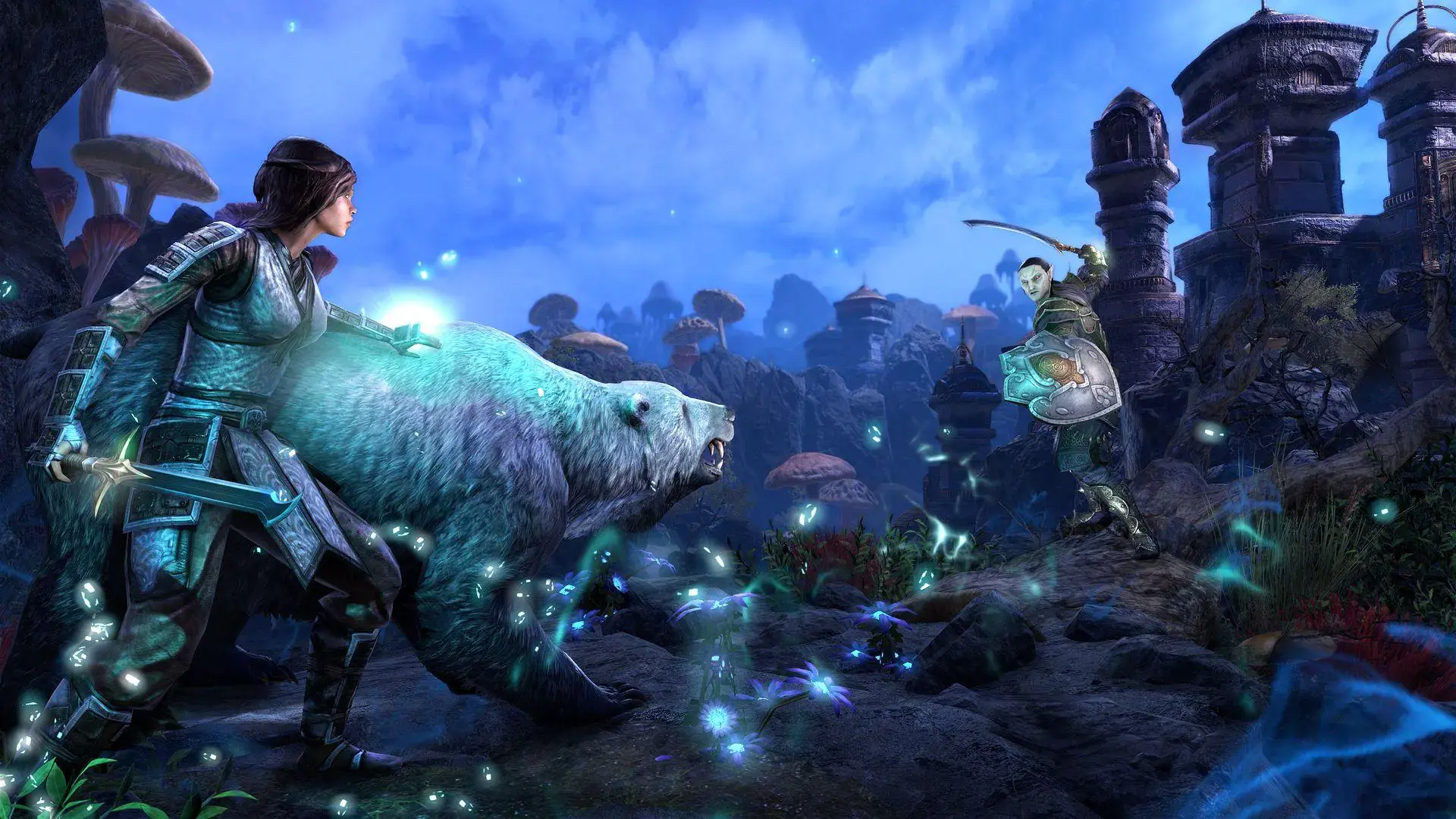
If you’re coming to Guild Wars 2 from games like World of Warcraft, Final Fantasy XIV, or The Elder Scrolls Online, tanking is going to feel immediately confusing. That’s because Guild Wars 2 does not use traditional MMO tanking at all. There is no threat or enmity system, no taunts, and no permanent aggro control. In most of the game, tanks don’t exist whatsoever. Instead, “tanking” only appears in specific endgame encounters, where boss targeting is handled through toughness values, positioning, or fight mechanics. More often than not, the player acting as the tank is actually a healer. This guide breaks down how tanking really works in Guild Wars 2, what the game expects from tanks in endgame PvE, and why trying to play a traditional tank will usually lead to confusion, wipes, or wasted stats.


What “PvE” Actually Means in Guild Wars 2
When players talk about PvE in Guild Wars 2, they are usually not referring to open-world content, story missions, or levelling. In practice, PvE almost always means hard endgame instanced content, specifically raid wings, individual raid encounters, and high-level fractals. These are the only parts of the game where structured group roles exist and where tanking mechanics can appear at all.
Endgame group composition in Guild Wars 2 is built around boons and damage, not traditional tank–healer–DPS roles. A standard five-player group consists of three DPS players, one boon-focused DPS, and one boon-focused healer. In raids, this structure is simply doubled. The key expectation is that one player maintains permanent Quickness, another maintains permanent Alacrity, and the healer supports the group while handling mechanics.
If an encounter has a recognisable tanking mechanic, there is no separate “tank” slot. Instead, tanking responsibility is added to an existing role, most commonly the BoonHealer.
How Tanking Actually Works in Endgame Encounters
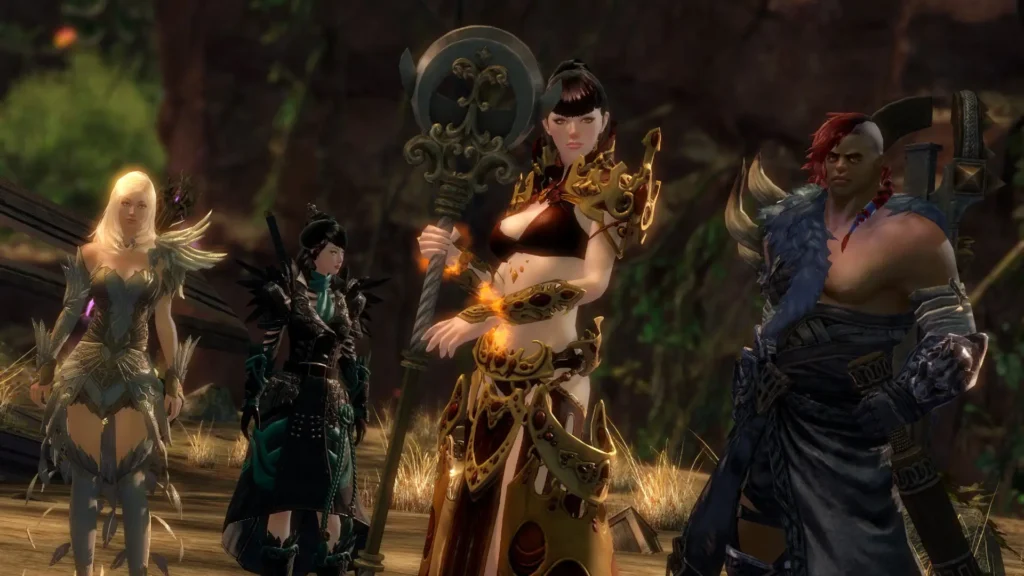
In Guild Wars 2 endgame PvE, tanking only exists when a specific encounter introduces a targeting mechanic. There is no universal aggro system, no threat generation, and no way to permanently control enemies. Instead, bosses choose their target based on predefined rules that vary by encounter.
In many raids and some strike missions, this targeting is based on Toughness. If one player has a higher Toughness value than the rest of the group, the boss will prioritise them as its target. This is why Toughness is actively avoided by most players, having extra Toughness can unintentionally assign you the tank role. When a group wants a tank, Toughness is added deliberately and controlled carefully.
Not all encounters use Toughness, however. Some bosses ignore stats entirely and instead target players based on proximity, positioning, fixed mechanics, or even random selection. In these fights, “tanking” is less about gear and more about standing in the correct place, moving at the right time, and controlling boss positioning for the group.
Regardless of how targeting works, the tank’s job is simple in concept but demanding in execution: keep the boss occupied, position it correctly, survive incoming mechanics, and continue performing their normal role. Most of the time, that role is healing and providing boons. Tanking is not a separate playstyle in Guild Wars 2, it is an added responsibility layered on top of an existing build.
Crucially, tanking in Guild Wars 2 is not about absorbing damage. While Toughness may be used to determine who a boss targets in certain encounters, it is not what actually keeps a tank alive. Survival is driven by movement, dodging, boon uptime, and proper mechanic execution. Even a heavily geared tank will die quickly if mechanics are ignored, while a well-played healer or support can successfully tank encounters with minimal additional defensive investment once aggro is established.
Why Healers End Up Tanking in Guild Wars 2
In Guild Wars 2, tanking most often falls to healers not because they are designed as tanks, but because of how endgame group roles are structured. Guild Wars 2 prioritises efficiency and role compression, meaning groups aim to cover as many responsibilities as possible with as few players as necessary.
Endgame groups typically only require one player to manage boss targeting and positioning, but they already bring two healers for boon coverage and sustain. Since healers are present regardless, it makes sense for one of them to take on tanking duties rather than dedicating a separate player purely to tanking.
Healers are also naturally suited to this responsibility. They are already positioned close to the group, have access to strong defensive boons, and are built to survive incoming damage while maintaining uptime on critical support effects. When a fight requires a designated tank, adjusting a healer’s toughness or positioning is far more efficient than reshaping a damage build around survivability.
Just as importantly, tanking in Guild Wars 2 does not replace a healer’s core job. A healer acting as the tank is still expected to maintain boon uptime, handle mechanics, and keep the group alive. Tanking is an additional responsibility, not a separate role, which is why experienced groups often expect healers to be comfortable with it, especially in raids and organised PvE.
Why Tank Builds Don’t Exist Outside Endgame PvE
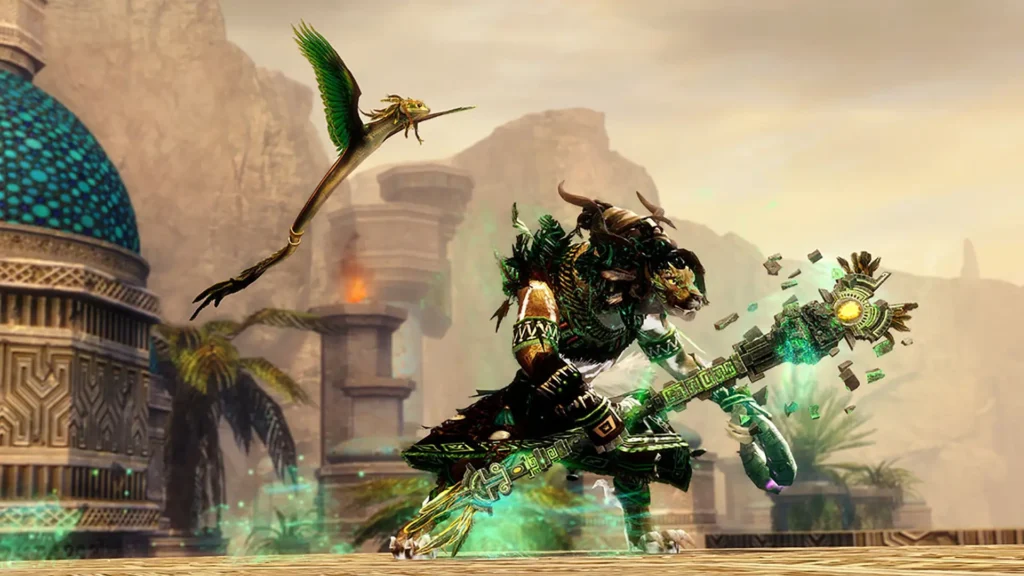
Outside of raids, strike missions, and high-level fractals, tank builds have little practical value in Guild Wars 2. Most of the game’s content, including open world events, story missions, levelling, and casual PvE is not designed around defined roles or aggro control. Enemies rarely focus a single player, and survivability is already built into every profession through self-healing, dodging, and defensive boons.
In these environments, stacking defensive stats like Toughness actively works against you. Enemies scale around damage output, events reward speed and efficiency, and killing threats quickly prevents far more damage than attempting to absorb it. A damage-focused build clears content faster, avoids mechanics more easily, and naturally sustains itself through active play.
Even when players talk about “tanking” in open world content, it usually just means being durable enough to survive mistakes, not controlling enemy behaviour. There is no meaningful aggro management, no benefit to holding enemies’ attention, and no reward for sacrificing damage to do so.
This is why Guild Wars 2 encourages players to run damage-oriented or hybrid builds outside of endgame PvE. Tanking only becomes relevant when an encounter explicitly demands it, and outside of those situations, traditional tank builds simply don’t align with how the game is designed to be played.
Is Guild Wars 2 a Tank MMO?
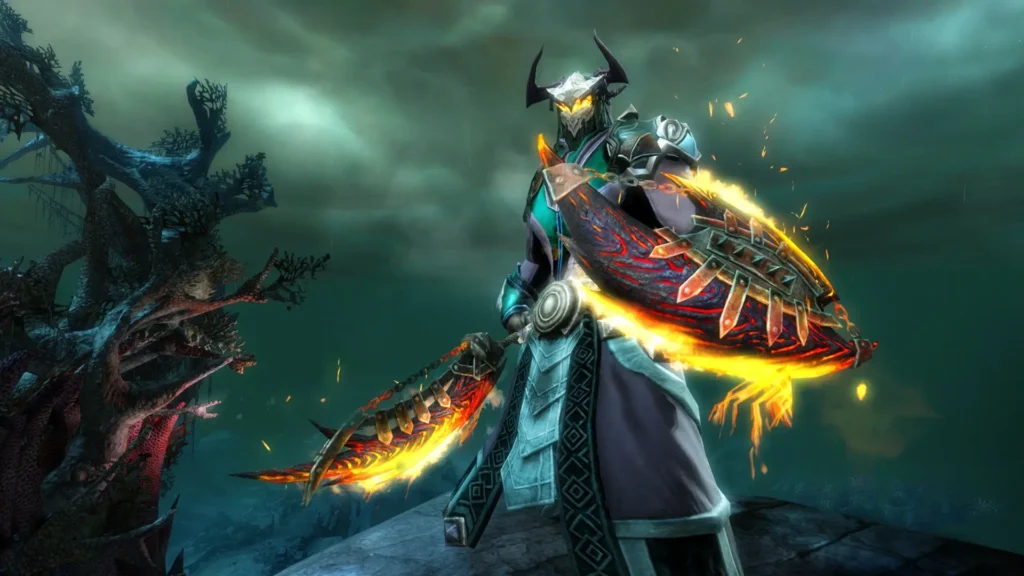
Guild Wars 2 does not treat tanking as a clearly defined, standalone role in the way many traditional MMORPGs do. For most of the game, tanking simply does not exist at all. There is no threat system, no aggro management, and no expectation that one player absorbs damage on behalf of the group.
However, in specific endgame PvE encounters, tanking becomes an important responsibility, just not in the form players might expect. Rather than queuing as a dedicated tank, tanking is usually layered on top of another role, most commonly a healer. In these situations, the tank is responsible for boss targeting, positioning, and survival, while still maintaining boon uptime, handling mechanics, and supporting the group.
This creates a unique form of tanking within the MMORPG space. Guild Wars 2 tanks are not passive damage sponges; they are highly active players juggling multiple responsibilities at once. Tanking is less about stats and mitigation, and more about awareness, positioning, and execution. For players who enjoy adaptable, high-engagement roles, this makes tanking in Guild Wars 2 one of the most distinctive and demanding support playstyles available.
Useful Links
- Guild Wars 2 Official Site
- See more Tank Builds & Guides (All MMORPGs)
- Guild Wars 2 Tank/Healer Guides (Coming Soon)
Support The Tank Club