






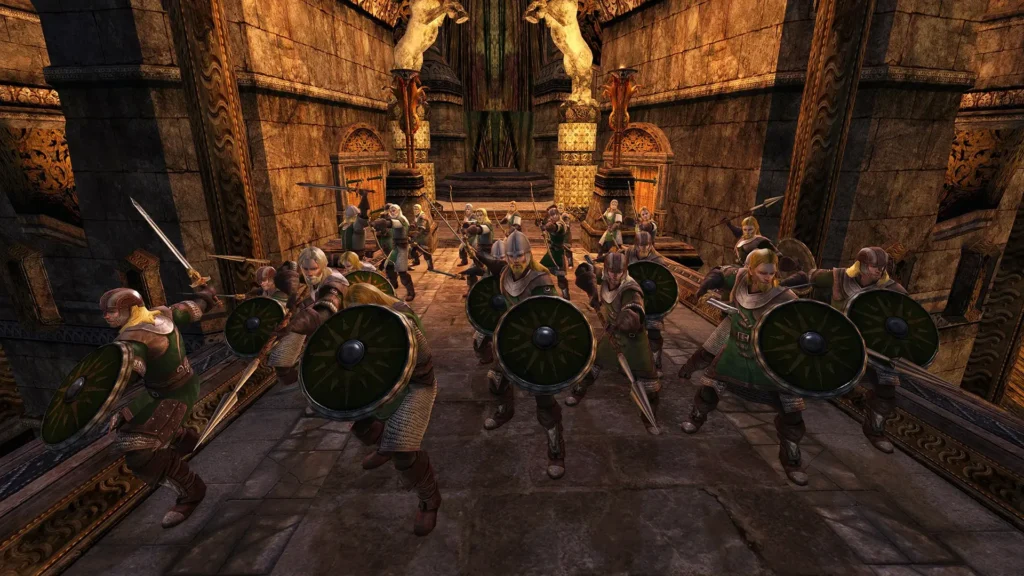
How Tanking Works in LOTRO – Tanking Basics Explained
Tanking in The Lord of the Rings Online follows a traditional MMORPG design built around threat tables, mitigation ratings, crowd control rules, and positional control. Unlike some modern MMOs that use simplified aggro rules, LOTRO uses a true threat system where enemies generally attack whoever has generated the highest threat value.
At its simplest, tanking is two jobs:
- Generate and maintain threat (aggro).
- Survive sustained damage while protecting the group.
But modern LOTRO tanking is more than “stand there and don’t die”. In real group content, especially as tiers get higher, tanks are expected to stabilise fights by handling adds cleanly, timing taunts intelligently, spotting dangerous inductions, managing CC discipline, and keeping enemies positioned so your group isn’t eating avoidable damage.
This page focuses on systems and fundamentals (not a patch-specific “raid meta” breakdown) so you can understand what tanking actually involves before worrying about perfect builds.
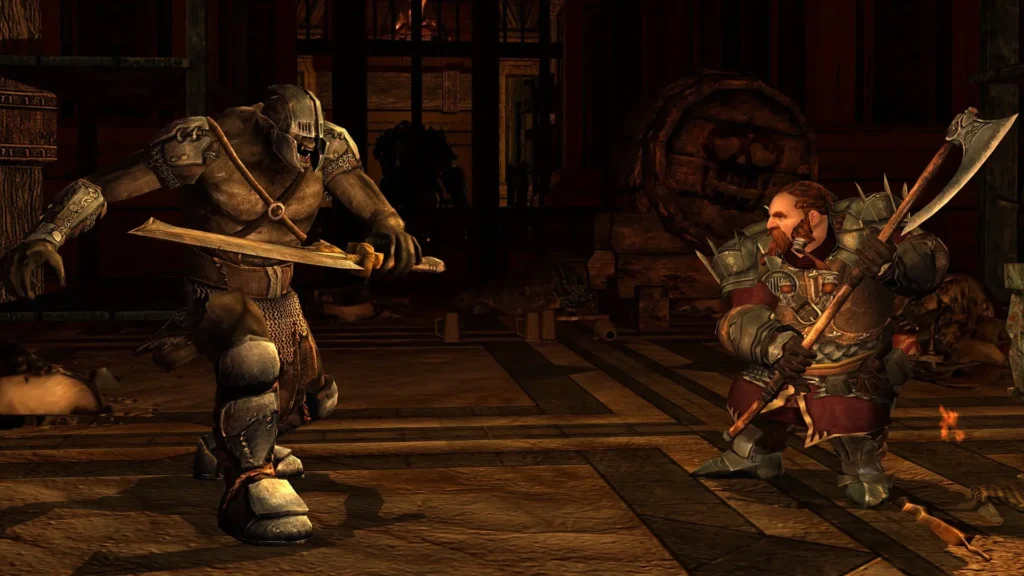
Threat & Aggro – How Combat Targeting Works
Threat (often called “aggro”) is the value that determines how dangerous an enemy considers you to be. In most situations, every hostile NPC maintains a threat table ranking players by the amount of threat they’ve generated, then targets the player at the top.
Threat is generated through things like:
- Damage dealt
- Certain healing (healing generates threat too, including some threat from overhealing)
- Skills with threat modifiers
- Taunts / forced attacks (more on this next)
In standard conditions, damage threat is often treated roughly like a 1:1 relationship. However, tank-specialised trait lines commonly generate significantly more threat from damage (often described as roughly 3:1 compared to the default). In plain English: if you’re traited properly for tanking, your normal rotation and AoE pressure should naturally help you stay ahead.
This is why tank specialisation matters — even before you start worrying about gear.
Threat vs Taunts (They Are Not the Same)
Threat and taunts are related, but they are not identical.
A taunt forces the enemy to attack you for a short duration. In LOTRO, taunts often also provide extra threat in a way that helps you “jump” to the top of the threat table — commonly by adding a fixed amount and/or copying the highest non-tank threat value currently on the target.
Here’s the key nuance newer tanks miss:
If you taunt before meaningful threat exists, there isn’t much to copy.
Using a taunt before combat has properly started generally won’t copy threat beyond the base threat the skill grants.
The practical rule (especially for AoE taunts)
Instead of opening every pull with your biggest taunt:
- Let DPS actually touch the pack (even briefly)
- Build threat with your normal high-threat skills / AoE
- Then use taunts to lock it down or recover control
Taunts are control tools, not your only threat plan.
Main Tank Responsibilities
The Main Tank (MT) is the player responsible for controlling the primary target’s threat and positioning. You’re the “anchor”, your job is to make the fight stable enough for everyone else to do their job.
At a minimum, a Main Tank should be doing most of the following:
- Holding threat on the main target consistently
- Picking up newly spawned adds quickly (without panic)
- Facing enemies away from the group when possible
- Watching induction bars and knowing what must be interrupted
- Avoiding sloppy CC that causes immunity at the wrong time
- Removing or coordinating corruption removal
- Surviving burst windows without the healer having a heart attack
- Understanding that mitigation effectiveness can shift based on enemy level and content tier
Staying alive is the baseline. The hard part is keeping everyone else alive while the fight is messy.
Snap Aggro vs Force Taunts
These two concepts get mixed up constantly, so keep them separate:
Snap Aggro
Snap aggro is your ability to grab control of new enemies quickly through AoE pressure and high-threat skills. Good snap aggro makes pulls feel clean and prevents random targets from being slapped across the room.
Force Taunts
Force taunts temporarily override threat targeting. They’re your safety net when things go wrong (or when DPS spikes hard). They’re also how you quickly peel mobs off a healer.
The goal is not “taunt constantly”.
The goal is to build threat so well that taunts become precision tools, not panic buttons.
Inductions & Interrupt Mechanics
If you’re tanking group content, turn on Induction Bar Display in your settings. It’s not optional.
Inductions generally fall into two buckets:
Standard inductions (often shown as yellow/orange)
These can be interrupted with normal interrupt skills. Stun immunity isn’t the main factor here — you just need to react quickly and not have your interrupt avoided or on cooldown at the wrong time.
Uninterruptible inductions (often shown as grey)
These cannot be stopped with normal interrupts. They typically require control effects such as stuns, knockdowns, or Fellowship Maneuvers, depending on the encounter and what the enemy is immune to.
Important note: many named enemies are immune to stuns (and some content is designed around that). This is why you don’t spam control mindlessly. Save the right tools for the right moment.
Crowd Control & Stun Immunity
A stun immobilises a target and prevents it from using abilities. Unlike dazes, stuns are not broken by damage. After a stun ends, the target gains roughly 10 seconds of stun immunity.
LOTRO also uses a hierarchy of control effects (mez/root/fear, stun, knockdown, and so on), and many enemies gain additional immunity behaviour depending on the encounter.
Why this matters for tanks
If you mindlessly throw stuns into every pack, you can accidentally cause immunity windows that make later mechanics harder (or impossible) to handle cleanly. Good tanks are disciplined: you control when it matters, not whenever it’s available.
Corruptions & Enemy Buffs
Corruptions are removable buffs on enemies. They can increase outgoing damage, improve defences, or enable mechanics. Many tanks can remove corruptions, and in smaller group content you may be expected to handle them.
However: not every corruption should be instantly removed. Some encounters rely on timing or specific states, and some groups coordinate removal for maximum safety.
A simple baseline rule:
- If you don’t know the encounter: remove obvious dangerous corruptions
- If you do know the encounter: follow the group plan and don’t freestyle it
Mitigation & Rating Scaling
Mitigation in LOTRO is rating-based and split into:
- Physical Mitigation
- Tactical Mitigation
Your mitigation % comes from a rating-to-percentage conversion, and your effective mitigation can be influenced by the enemy’s level relative to yours. If an enemy is higher level, your effective mitigation can be lower due to scaling penalties (up to a cap).
That means hitting “cap” in your character panel doesn’t automatically mean you’re safe in harder content.
Tanks pushing difficult tiers tend to:
- prioritise reliable mitigation coverage,
- layer defensive bonuses through traits and gear,
- and aim for defensive stability rather than chasing only one stat.
Positioning & Spatial Control
Positioning is one of the most underrated tank skills and one of the fastest ways to look like a “good tank” without needing perfect gear.
In general:
- Keep enemies faced away from the group to reduce accidental frontal damage
- Keep the fight stable and predictable for melee DPS
- Only spread the group when mechanics demand it
- If a boss attack doesn’t track once cast, move out of danger rather than “trying to tank it”
- If an attack tracks, make sure the boss isn’t sweeping through your stacked group
A tank who controls space controls the fight.
Tank Class Overview (Fundamental Perspective)
LOTRO has multiple classes capable of tanking. Historically, Guardian has often been viewed as the prototypical main tank due to its stable toolkit, but Captain, Beorning, Brawler, Champion (in specific trait lines), and Warden can all fulfil tank roles depending on content and specialisation.
Balance shifts over time and viability varies by encounter tier and group composition, so this guide stays focused on shared tank mechanics rather than hard ranking classes.
Quick Tank Checklist (Use This Before You Queue)
If you want a simple pre-run mental checklist:
✅ Induction bars enabled
✅ You know your main interrupt and a backup option
✅ You understand which taunt is your emergency reset vs your “lock-in” tool
✅ You’re ready to pick up adds cleanly (not just the boss)
✅ You’re watching corruptions instead of ignoring them
✅ You’re positioning enemies so the group isn’t eating cleaves
✅ You’re not spamming stuns into immunity windows “just because you can”
This alone will put you ahead of most pug tanks.
Final Thoughts
At its core, tanking in LOTRO is about control.
If you understand:
- how threat is generated and modified,
- how taunts interact with threat tables,
- how mitigation behaves against higher-level enemies,
- when to interrupt vs when to use control effects,
- how stun immunity affects encounter flow,
- when to remove corruptions,
- and how to position enemies for group safety…
…you’ll be able to tank effectively in most group content.
Optimisation and meta composition come later. Fundamentals come first.
LOTRO Tanking FAQ
Does healing generate threat in LOTRO?
Yes. Healing generates threat in LOTRO, including some threat from overhealing (at a reduced rate). This is why healers can sometimes pull aggro if the tank has not yet established a strong threat lead. Proper tank specialisation and early threat generation are important to prevent healer aggro spikes.
What is the difference between threat and a taunt?
Threat is the value that determines who an enemy targets based on accumulated actions like damage and healing. A taunt (or forced attack) temporarily forces the enemy to target the tank and often adds additional threat or copies the highest non-tank threat value. Taunts are control tools — not a replacement for sustained threat generation.
Why do my stuns sometimes stop working?
After a stun ends, enemies gain approximately 10 seconds of stun immunity. Many named enemies are also permanently immune to certain control effects. If you use stuns too frequently or at the wrong time, you may trigger immunity windows that prevent you from stopping later mechanics.
Why am I taking more damage in higher-tier content even though I’m at mitigation cap?
Should tanks always remove corruptions immediately?
Not always. While corruptions often increase enemy damage or survivability and should usually be removed, some encounters rely on specific corruption states as part of their mechanics. In organised groups, corruption removal is sometimes timed rather than automatic.
Is Guardian the only viable main tank in LOTRO?
No. While Guardian has historically been viewed as the most straightforward and stable tank, multiple classes can fulfil tank roles depending on specialisation and content tier. Balance shifts over time, and fundamentals matter more than class choice for most group content.
Useful Links
- Explore more ESO Tank Builds
- New to tanking? Learn how to Tank in ESO
- ESO Tank Gear Guide
- Visit The Tank Club ESO Hub
- Looking for something new? Browse the Best Console MMORPGs for 2026
Support The Tank Club