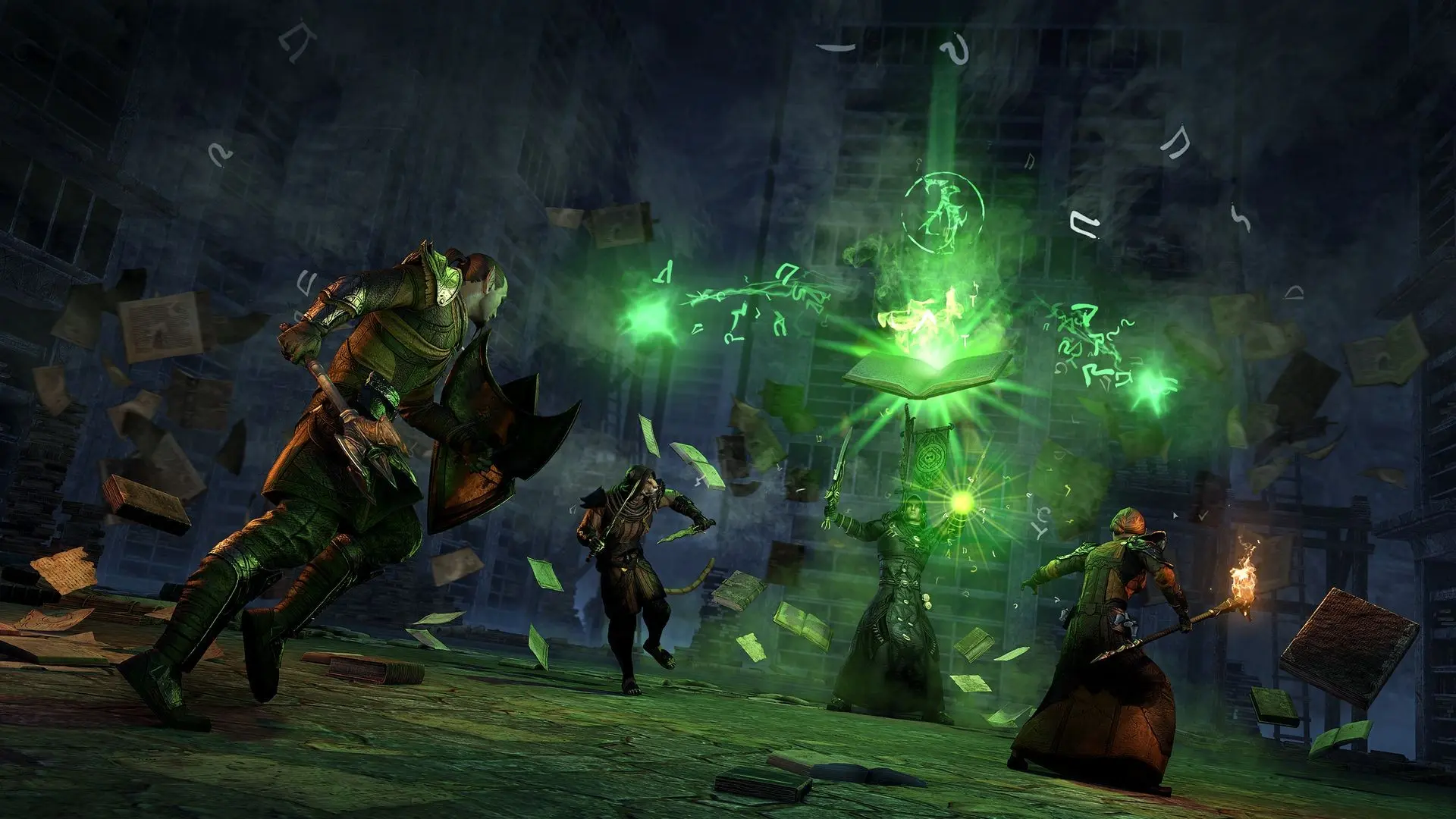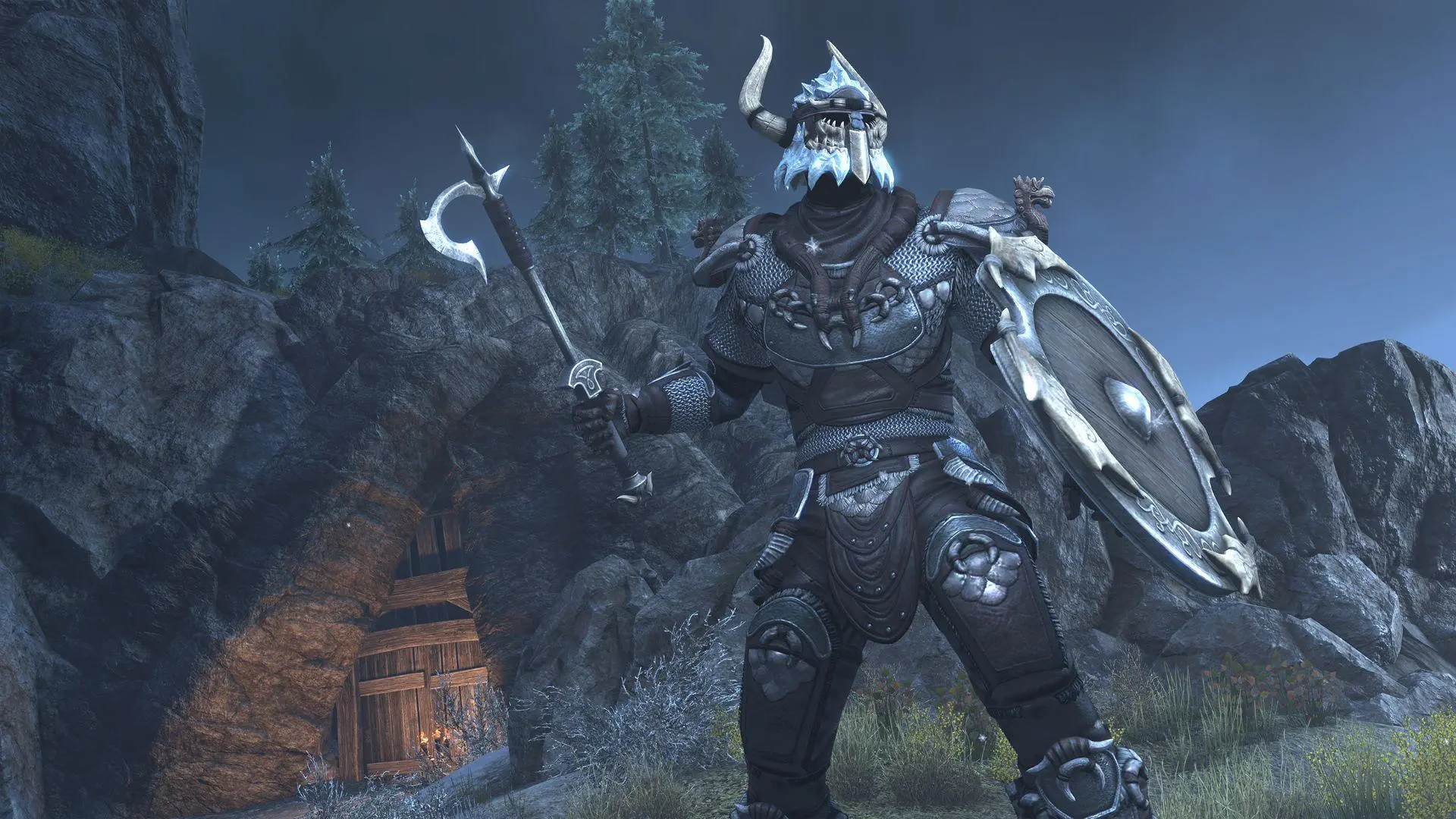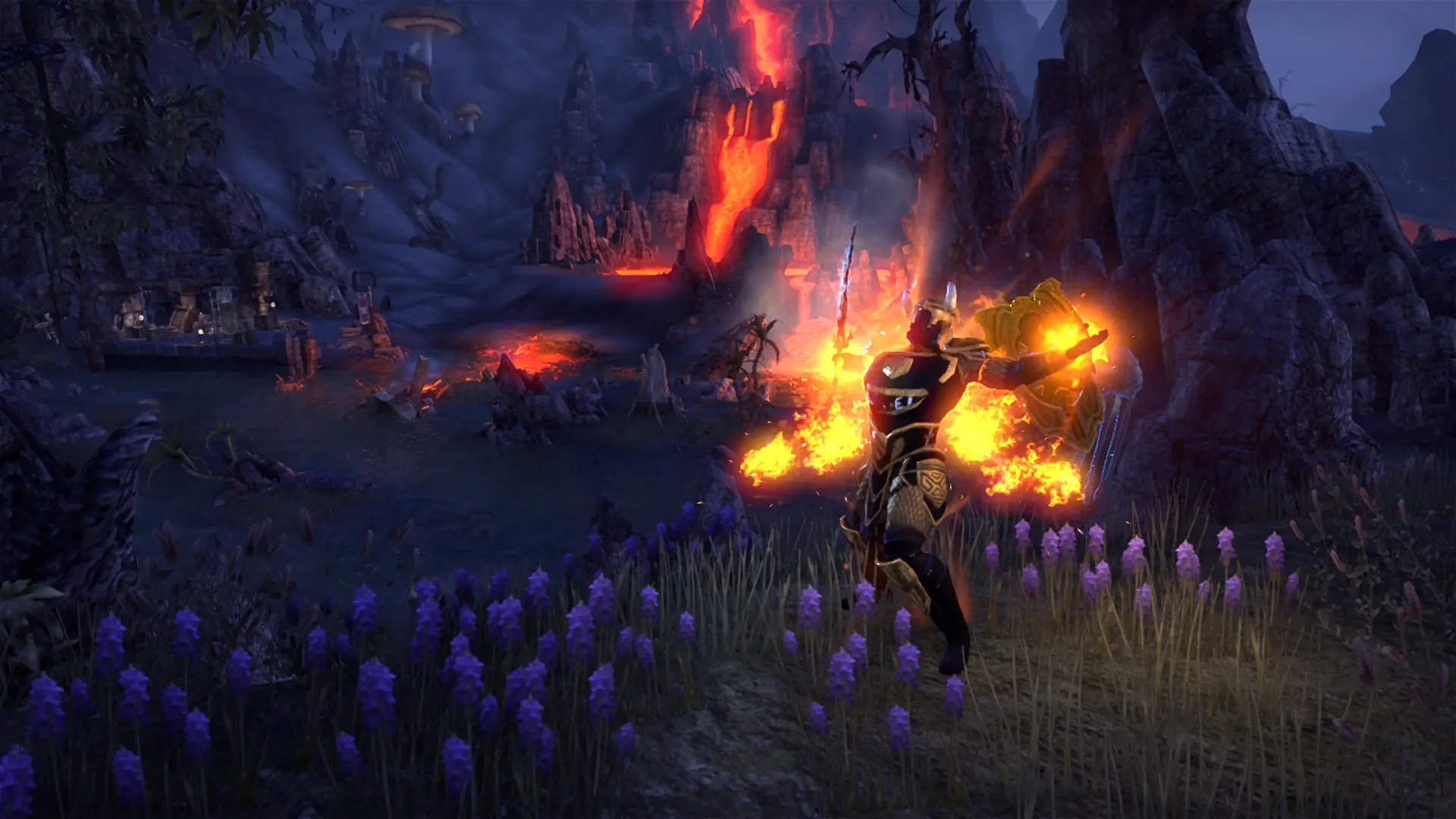











Dragonknight Tanks have one of the most complete toolkits in ESO. Strong self-healing, shields, chains and crowd control are built into the class, while its passives help with sustain, resistances and Ultimate generation. You have the tools to control a fight and stay alive without needing a complicated setup.
That makes the DK an excellent choice for a new tank, especially in dungeons. It is comfortable to play with its own class skills, and Scribing gives you more ways to combine useful effects and free up skill slots. Staying as a full Dragonknight also lets you take advantage of Class Masteries.
In organised trials, a DK Tank is a more situational choice. Groups may already have a Dragonknight damage dealer or ZenDK providing benefits that once made the tank slot more valuable. You can still tank demanding content on a DK, but the best choice depends on what the rest of your group brings.
If you want a durable, flexible tank that feels capable from the start, Dragonknight remains one of the easiest classes to recommend.
Not sure if this is the right Tank for you?
Compare all ESO Tank builds and find the class that fits your playstyle and group role.
Want My Best Builds Before Everyone Else?
Get builds before release, exclusive setups, and direct input on future content.
Quick-Start Dragonknight Tank Build
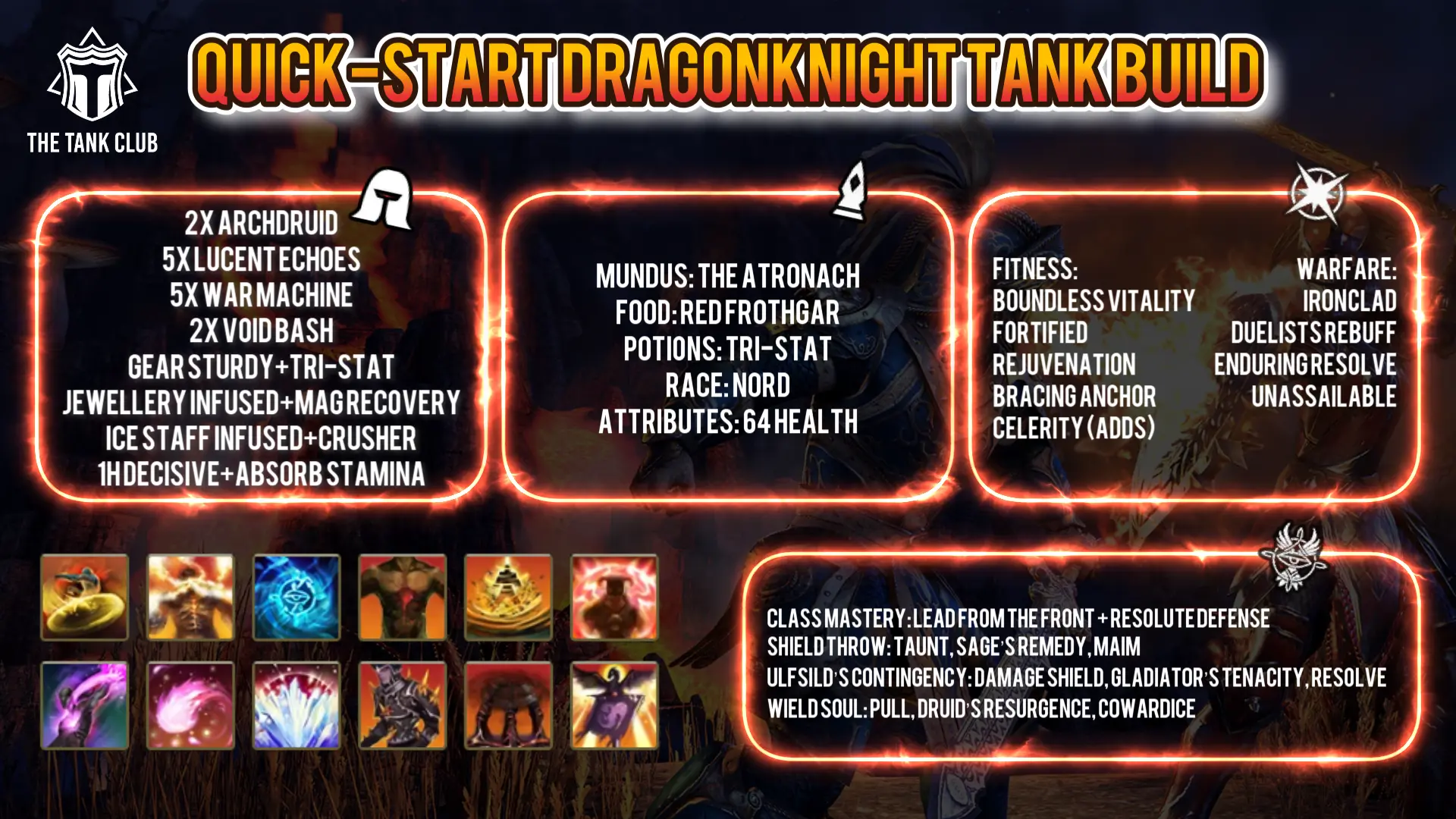
Quick Build Snapshot
Build Focus: Dungeons & Arenas
Difficulty: Beginner–Intermediate
Playstyle: Enemy control, strong survivability and active resource management
Best Content: Veteran Dungeons, Hardmodes & Arenas
Trial Role: Situational, depending on group composition
Patch: Update 51 (2026)
DK Tank Strengths, Weaknesses & Group Benefits
Strengths
- Complete tanking toolkit – Chains, crowd control, shields and self-healing are available within the class.
- Strong survivability – High resistances and defensive skills make the DK forgiving when learning encounters.
- Excellent dungeon control – Easy access to pulls and crowd control helps you manage difficult add packs.
- Flexible group utility – Can bring useful buffs and support when they are not already covered by the group.
Weaknesses
- Resource sustain needs planning – The class rework made sustain harder, so additional skills or setup choices may be needed.
- Limited bar space – Sustain tools compete with defensive skills, buffs and encounter-specific utility.
- Some buffs are awkward to provide – Magma Fist is costly to maintain, while Traumatic Burns can be unnatural for a tank to apply consistently.
- Less demand in organised trials – A DK damage dealer may already cover key group benefits, while other tank classes can bring more to that particular group.
DK Group Benefits
- Lead from the Front – Major Berserk & Major Protection
- Standard of Might – 300 Weapon & Spell Damage & 10% Damage Reduction
- Hearth and Home – AoE HoT, Minor Fortitude & Minor Heroism & Enemy Snare.
- Soul of Flame – AoE Interrupt
- Traumatic Burns – 5% Flame Damage Increase
- Disintegrating Dragonfire – AoE Major Breach & Burning effect
- Choking Talons – AoE Minor Maim & Ignite synergy
- Blood of the Elder Dragon – AoE Burst Heal, Minor Courage & Major Fortitude
- Protect the Brood – 25% Projectile Damage Reduction & Minor Protection
- Chains of Dominance – Enemy Pull, Taunt & Major Cowardice
- Elder Dragon – Minor Brutality
- Magma Shell – 133% Max Health Shield
- Magma Fist – Increased Enemy Damage Taken by 66×3
- Igneous Weapons – Major Brutality
- Igneous Shield – Group Damage Shield
- Fossilize – Minor Breach & Minor Vulnerability & Snare, Stun, Immobilise
DK Tank Essentials: Stats, Race & Consumables
Attributes
- 64 Health
Mundus Stone
The Atronach Mundus Stone provides the most reliable value for Dragonknight tanking by increasing Magicka Recovery.
Maintaining skill uptime is one of the biggest challenges for tanks, especially in longer pulls and boss fights, and additional Magicka Recovery allows you to cast important abilities more frequently without over-relying on heavy attacks or external support.
Food Choices
Red Frothgar is the strongest all-round Dragonknight tank food, offering increased Max Health alongside Magicka Recovery. This combination makes it ideal for most players and most scenarios.
Smoked Bear Haunch, or the cheaper alternative Jewels of Misrule, trades some Max Health and Magicka Recovery compared to Red Frothgar, for additional Health and Stamina Recovery. These options are best suited to experienced tanks who block less frequently and are comfortable managing incoming damage.
Bewitched Sugar Skulls can be used situationally when additional Max Resources are needed, but it is generally less efficient for tanking compared to recovery-focused foods.
Potions
The standard potion choice for dungeon tanking is Essence of Health (Tri-Stat) Potions, which restore all three resources and provide increased recovery across the board. These are reliable, flexible, and work well for every class.
Race Selection
Nord is the strongest overall race for tanking due to its bonus resistances, Max Stamina, and increased Ultimate generation. These benefits are universally useful across all tank classes.
Alternatively
- Imperial provides strong Max Health and Stamina alongside reduced ability costs, improving overall durability and resource control.
- Redguard offers excellent stamina sustain through weapon cost reduction and periodic stamina return while dealing damage, making it strong in prolonged encounters.
Not sure which race is right for you? See our full ESO Tank Race guide.
Attributes
Placing 64 points into Health is the most consistent and reliable choice for Dragonknight tanking across all content. This provides a strong survivability baseline while allowing your other resources to be managed through gear, food, and recovery.
Recommended Stats (Fully Buffed)
40,000+ Health
A useful target for Veteran DLC and Hard Mode content. More Health gives you room to survive unblocked hits and strengthens your Health-scaling shields and heals. You can run less in easier content, but do not stack Health at the expense of the resources you need to keep tanking.
20,000+ Stamina
Stamina pays for blocking, dodging, breaking free and several DK skills. Around 20,000 gives you a comfortable pool to work with. If you regularly run out during mechanics, look at your block habits, skill costs and ways to restore Stamina as well as your maximum value.
Under 1,000 Block Cost
Aim to bring your block cost below 1,000 for a comfortable dungeon setup. Blocking repeated attacks, especially during large add pulls, can drain Stamina quickly if the cost is too high. A few Sturdy armor pieces or one Infused jewellery piece with a Bracing enchantment can help you reach this target. Check your final block cost before adding more reductions: once blocking feels sustainable, further investment offers less benefit. Releasing block when it is safe remains an important part of managing Stamina.
15,000+ Magicka
Magicka fuels many of your defensive and support skills. Around 15,000 is a workable baseline, but a larger pool can help when you need several casts close together. Your recovery and active sustain tools matter more over a long fight than Max Magicka alone.
25k–33k Resistances
Resistances reduce damage you take, including damage you cannot block. 33,100 is the practical mitigation cap for PvE; reaching it at all times is not necessary.
- Base-game content: You can usually manage comfortably below the cap while learning when to block and heal.
- Veteran DLC content: Around 25,000 or more is a useful starting point.
- DLC Hard Modes: Moving closer to 30,000 will give you more room for mistakes and sustained damage.
Check your buffed resistances before changing gear. DK passives, Major Resolve and your group’s buffs may already provide what you need. Extra resistances are most noticeable against unblocked hits and damage over time; they offer less added value when you are already mitigating an attack through block.
2,000+ Magicka Recovery
This is a useful starting target for keeping heals, buffs and debuffs running through a long fight. It is not a minimum requirement. Heart of Flame, potions and Ultimate-based resource returns can let you play comfortably with less, while a skill-heavy setup may need more. If your Magicka regularly runs dry, adjust your casting and sustain tools before chasing a particular number on the character sheet.
Should Dragonknight Tanks Use Subclassing?
For most Dragonknight Tank builds, I recommend staying with the full class. DK already has a broad tanking toolkit, and Class Mastery adds benefits without requiring you to give up its class skill lines. Subclassing is therefore unlikely to improve a general dungeon setup enough to make it the default choice.
It can be worthwhile in an organised group with a specific gap to fill. If other players already cover the DK benefits your group needs, you can replace a less useful skill line with one that brings the missing support or defensive tools. In that situation, build around the group’s requirements rather than subclassing simply because the option is available.
For a full breakdown of subclass combinations, read our ESO Tank Subclassing Guide.
DK Tank Gear Setups for Dungeons & Trials
| Piece | Set | Weight | Trait | Enchantment |
|---|---|---|---|---|
| Head | Archdruid Devyric | Medium | Sturdy | Prismatic Defence |
| Shoulder | Archdruid Devyric | Light | Sturdy | Prismatic Defence |
| Chest | Lucent Echoes | Heavy | Sturdy | Prismatic Defence |
| Hands | Lucent Echoes | Heavy | Sturdy | Prismatic Defence |
| Waist | Lucent Echoes | Heavy | Sturdy | Prismatic Defence |
| Legs | Lucent Echoes | Heavy | Sturdy | Prismatic Defence |
| Feet | Lucent Echoes | Heavy | Sturdy | Prismatic Defence |
| Necklace | War Machine | Jewellery | Infused | Magicka Recovery |
| Ring | War Machine | Jewellery | Infused | Magicka Recovery |
| Ring | War Machine | Jewellery | Infused | Magicka Recovery |
| Main Hand | Void Bash | Any 1H | Decisive | Absorb Stamina |
| Off Hand | Void Bash | Shield | Sturdy | Prismatic Defence |
| Main Hand Backup | War Machine | Ice Staff | Infused | Crusher |
| Piece | Set | Weight | Trait | Enchantment |
|---|---|---|---|---|
| Head | Tremorscale/Archdruid/Encratis /Nazaray | Medium | Reinforced | Prismatic Defence |
| Shoulder | Tremorscale/Archdruid/Encratis /Nazaray | Light | Divines/Sturdy | Prismatic Defence |
| Chest | Lucent Echoes | Heavy | Reinforced | Prismatic Defence |
| Hands | Lucent Echoes | Heavy | Divines/Sturdy | Prismatic Defence |
| Waist | Lucent Echoes | Heavy | Divines/Sturdy | Prismatic Defence |
| Legs | Lucent Echoes | Heavy | Reinforced | Prismatic Defence |
| Feet | Lucent Echoes | Heavy | Divines/Sturdy | Prismatic Defence |
| Necklace | Pillager’s Profit | Jewellery | Harmony | Magicka Recovery |
| Ring | Pillager’s Profit | Jewellery | Harmony | Magicka Recovery |
| Ring | Pillager’s Profit | Jewellery | Harmony | Magicka Recovery |
| Main Hand | Armor of the Trainee | Any 1H | Decisive | Hardening |
| Off Hand | Druid’s Braid | Shield | Divines | Prismatic Defence |
| Main Hand Backup | Pillager’s Profit | Ice Staff | Infused | Crusher |
| Piece | Set | Weight | Trait | Enchantment |
|---|---|---|---|---|
| Head | Magma Incarnate/Baron Thirsk | Medium | Divines/Sturdy | Prismatic Defence |
| Shoulder | Pearlescent Ward | Heavy | Divines/Sturdy | Prismatic Defence |
| Chest | Cryptcanon Vestments | Light | Nirnhoned | Prismatic Defence |
| Hands | Pearlescent Ward | Heavy | Divines/Sturdy | Prismatic Defence |
| Waist | Pearlescent Ward | Heavy | Divines/Sturdy | Prismatic Defence |
| Legs | Pearlescent Ward | Heavy | Divines/Sturdy | Prismatic Defence |
| Feet | Pearlescent Ward | Heavy | Divines/Sturdy | Prismatic Defence |
| Necklace | Xoryn’s Masterpiece | Jewellery | Infused | Prismatic Cost Reduction |
| Ring | Xoryn’s Masterpiece | Jewellery | Infused | Prismatic Cost Reduction |
| Ring | Xoryn’s Masterpiece | Jewellery | Infused | Prismatic Cost Reduction |
| Main Hand | Xoryn’s Masterpiece | Any 1H | Precise | Hardening |
| Off Hand | Xoryn’s Masterpiece | Shield | Reinforced | Prismatic Defence |
| Main Hand Backup | Xoryn’s Masterpiece | Ice Staff | Infused | Crusher |
| Piece | Set | Weight | Trait | Enchantment |
|---|---|---|---|---|
| Head | Archdruid | Medium | Sturdy | Prismatic Defence |
| Shoulder | Archdruid | Light | Sturdy | Prismatic Defence |
| Chest | Lucent Echoes & Pearlescent Ward | Heavy | Sturdy | Prismatic Defence |
| Hands | Lucent Echoes & Pearlescent Ward | Heavy | Sturdy | Prismatic Defence |
| Waist | Lucent Echoes & Pearlescent Ward | Heavy | Sturdy | Prismatic Defence |
| Legs | Lucent Echoes & Pearlescent Ward | Heavy | Sturdy | Prismatic Defence |
| Feet | Lucent Echoes & Pearlescent Ward | Heavy | Sturdy | Prismatic Defence |
| Necklace | Turning Tide & Crimson Oath’s Rive | Jewellery | Swift | Magicka Recovery |
| Ring | Turning Tide & Crimson Oath’s Rive | Jewellery | Swift | Magicka Recovery |
| Ring | Turning Tide & Crimson Oath’s Rive | Jewellery | Swift | Magicka Recovery |
| Main Hand | Turning Tide & Crimson Oath’s Rive | Any 1H | Decisive | Hardening |
| Off Hand | Turning Tide & Crimson Oath’s Rive | Shield | Sturdy | Prismatic Defence |
| Main Hand Backup | Turning Tide & Crimson Oath’s Rive | Ice Staff | Charged | Crusher |
Default Recommendation:
If you prefer a single, reliable setup, use the Dungeon gear configuration. It offers strong group utility, consistent survivability, and adapts well to both dungeon and trial environments.
For a full breakdown of tank gear in The Elder Scrolls Online, including traits, enchantments, and optimisation strategies, see the ESO Tank Gear Guide.
Gear Information
Gear Weights
- 5 Heavy / 1 Medium / 1 Light: A strong default for trial Main Tanks. Five Heavy pieces provide defensive passives and resistances, while one Medium and one Light give you the full Undaunted Mettle bonus and useful passives from both armor lines. This is a balanced setup for veteran and hard mode trials, though you can adjust the weights for a specific encounter.
Armor Traits
- Sturdy – Reduces Block Cost and is one of the most reliable tank traits for stamina sustain, particularly useful during prolonged block phases or encounters with multiple enemies.
- Divines – Increases the effectiveness of your Mundus Stone and is a strong option when using recovery-focused Mundus choices to improve sustain.
- Reinforced – Provides additional Armor and can help reach the resistance cap in difficult Veteran DLC and Hardmode encounters.
- Nirnhoned – Primarily used on the Cryptcanon Vestments Mythic to maximise the resistance bonus gained from the item.
Armor Enchants
- Prismatic Defence (Tri-Stat) – Adds Max Health, Magicka and Stamina. Across a full setup, the combined gain is over 2,000 points higher than using single-stat glyphs, although a Health, Magicka or Stamina glyph will provide more of that one resource on an individual piece.
- Prismatic glyphs cost more to make because they require Hakeijo. If you are gearing a new tank on a budget, use single-stat enchantments where needed and replace them gradually, starting with the chest, legs, head and shield, which receive the full enchantment value.
Jewellery
- Harmony + Magicka Recovery: Strong when your group provides frequent synergies. Harmony restores additional Health, Magicka and Stamina whenever you activate one, while Magicka Recovery enchants provide steady sustain.
- Infused + Magicka Recovery: A reliable alternative when synergies are less frequent or inconsistent. It improves your recovery without depending on another player.
- Prismatic Cost Reduction: Consider this if you regularly cast both Magicka and Stamina skills. If most of your active skills cost Magicka, a more focused enchant may provide better value.
- Magicka Cost Reduction: Can work well if you cast Magicka skills frequently. It saves resources on each cast, whereas Magicka Recovery continues to provide value between casts. Compare them against how you actually play rather than assuming either is always stronger.
- Swift: Useful for add pulls, especially with a separate gear setup for those phases. The extra movement speed helps you reach, taunt and position enemies before they spread through the group.
One-Hand & Shield
- Decisive + Hardening: A solid all-round choice. Decisive gives you a chance to generate additional Ultimate, while Hardening provides a small damage shield.
- Infused + Weakening: A defensive option when you need to reduce a dangerous enemy’s Weapon and Spell Damage, particularly in encounters where the group splits or tanks handle separate targets.
- Absorb Stamina enchant: Offers some Stamina return and can apply Sundered for Minor Breach. Check whether your other skills and group members already maintain Minor Breach before choosing it for that purpose.
Ice Staff
- Infused + Crusher: The standard boss setup when you are responsible for Crusher. Infused strengthens the enchant and helps maintain its Armor reduction through Wall of Elements. Keep the Wall positioned so Crusher applies to the priority target.
- Charged + Crusher: An option for add pulls when spreading Chilled is more valuable than maximising Crusher on a single target. With Frost Pulsar, Charged improves your chance of applying Chilled across the pack, providing Minor Maim and Minor Brittle.
Dungeon
This is a flexible four-player setup built around group damage and fast add pulls. Because your buffs usually affect only two or three other players, several set combinations can perform well. Start with the gear shown in the table, then swap pieces when your group already covers a buff or you need more sustain.
Monster Set – Archdruid Devyric
Archdruid Devyric applies Major Vulnerability after you damage an enemy with a Heavy Attack. Aim it at the priority target before your group’s damage burst. The effect hits enemies in a cone, so positioning matters; a Heavy Attack alone will not guarantee that every enemy in a pull receives the debuff.
Swap to Tremorscale when the group needs more penetration, Baron Zaudrus when you want more Ultimate generation, or Roksa the Warped if personal sustain is holding you back. Spaulder of Ruin is another group damage option, but it replaces your two-piece Monster Set.
Weapon Set – Void Bash
Void Bash activates when you damage an enemy with Power Bash, pulling nearby enemies into a tight stack. This makes add pulls faster and helps your damage dealers hit more targets at once. It handles the grouping; you still need to control and taunt priority enemies as required.
Five-Piece Sets – Lucent Echoes and War Machine
While you are above 50% Health, Lucent Echoes increases your group’s Critical Damage and Critical Healing. Below that threshold, its defensive effect helps protect you during a dangerous moment. Check whether your damage dealers are already near the Critical Damage cap before treating it as an automatic damage increase.
War Machine grants Major Slayer to you and the closest five group members when you cast an Ultimate. In a dungeon, that can cover the whole group and pairs well with a planned Standard of Might cast. Its duration depends on the Ultimate spent, so aim to use it when the group can deal damage rather than casting solely to refresh the set. War Machine is active on the back bar, so cast your Ultimate there; this leaves the front bar free for Void Bash.
Other five-piece options
Turning Tide is an alternative source of Major Vulnerability: block an attack, then Bash to apply it. It is generally a swap for Archdruid Devyric, not a reason to run both without a specific uptime plan. Crimson Oath’s Rive can help a group that needs more enemy armor reduction. Pillager’s Profit supports group Ultimate generation, Pearlescent Ward offers a steady group damage bonus, and Powerful Assault is useful when another support is not already wearing it. Choose the effect your group is missing.
Mythic Option – Spaulder of Ruin
Spaulder grants nearby allies Weapon and Spell Damage, making it attractive when your group can stay within its aura. The cost is reduced Health, Magicka and Stamina Recovery for each ally benefiting from it. A one-piece recovery bonus such as Magma Incarnate helps, but does not automatically erase that cost. On a DK Tank already managing sustain carefully, test how comfortable the setup feels before making it your default.
Trials Main Tank
The Main Tank setup is a starting point for an organised group. Before choosing your second five-piece set and Monster Set, check the group’s penetration, Critical Damage, Major Vulnerability and Ultimate support. Duplicate buffs can leave a valuable gear slot doing very little.
Monster Set
Use Tremorscale when the group needs additional penetration. Archdruid Devyric can help cover Major Vulnerability when its uptime is otherwise lacking. Encratis’s Behemoth is an encounter and group composition choice for Flame damage support, while Nazaray can extend important debuffs when your group coordinates around it. If those jobs are covered, Baron Zaudrus provides personal Ultimate generation for more frequent support casts.
Five-Piece Set – Lucent Echoes
Lucent Echoes gives nearby group members Critical Damage and Critical Healing while you remain above 50% Health, then offers you damage reduction when your Health drops. It is a strong general Main Tank choice, provided the damage bonus is useful to your group rather than wasted against the Critical Damage cap.
Second Five-Piece Set – Group Choice
Choose this slot for a specific missing benefit:
- Pillager’s Profit distributes Ultimate to the group after you cast an Ultimate. Coordinate your casts so the extra Ultimate supports the group’s damage windows.
- Morag Tong increases the Poison and Disease damage enemies take. Its value depends on how much of your group’s damage actually uses those types.
- Claw of Yolnahkriin supplies Minor Courage when another player or skill is not already covering it.
Trials Off Tank
The Off Tank has more room to focus on group support, although the right gear still depends on the encounter and your actual tanking duties. A DK can fill this role when the Main Tank slot is assigned to another class.
Monster Set or One-Piece Bonus
The setup shown uses a single piece of Magma Incarnate or Baron Thirsk for recovery alongside a Mythic item. This helps with sustain during long fights. If you are not using the Mythic, reassess this slot: a full Monster Set may provide more value than a lone recovery piece.
Five-Piece Set – Pearlescent Ward
Pearlescent Ward provides group Weapon and Spell Damage while players are alive. If group members die, its damage reduction from non-player enemies becomes more valuable, helping the remaining players stabilise a progression pull. It offers useful support without adding another skill or timed proc to your rotation.
Second Five-Piece Set – Xoryn’s Masterpiece or Crimson Oath’s Rive
Xoryn’s Masterpiece increases nearby group members’ Max Magicka and Max Stamina. It is a straightforward resource bonus, particularly useful if the group is casting Aggressive Horn less frequently.
Choose Crimson Oath’s Rive when the group needs more armor reduction. Its area effect can reduce the penetration burden on damage dealers, but check the group’s full penetration calculation before assuming it lets someone remove Alkosh. Use this slot for another set if those needs are already covered.
Mythic Option – Cryptcanon Vestments
Cryptcanon prevents you from casting Ultimates. Activating your Ultimate instead transfers the stored Ultimate to living group members, divided among them. It is a specialised choice for a group that gains more from those players casting extra Ultimates than from your own Standard of Might, Aggressive Horn or defensive Ultimate. Make that trade-off explicit: this is a different Ultimate support setup, not a free addition to the standard DK rotation.
DK Tank Class Masteries
Dragonknight have some benefits from the Class Mastery system but the most beneficial group options can just as easily be supplied by a Damage Dealer.
Recommended Class Masteries
For most Dragonknight Tanks, Lead from the Front and Resolute Defense are the strongest combination. Together they provide an excellent balance of group support, survivability and sustain.
If your group already has Major Berserk and Major Protection covered, or if you simply want to focus more on personal survivability, Inexorable Descent is an outstanding alternative and may ultimately prove more valuable than Booming Voice thanks to its near permanent uptime.
Lead from the Front
Lead from the Front upgrades The Storm Voice passive, which normally restores Health, Magicka and Stamina whenever you cast an Ultimate.
In addition to the resource restoration, this mastery grants Major Berserk and Major Protection to both you and nearby group members based on the amount of Ultimate spent. Since Dragonknights excel at generating and using Ultimate, this translates into strong offensive and defensive group support.
The only drawback is that many organised groups already run Dragonknight Damage Dealers who may provide the same benefits. However, if these buffs are not already covered, Lead From The Front is one of the strongest group support masteries available to Tanks.
Resolute Defense
Resolute Defense is arguably the most Tank-focused Class Mastery available to Dragonknights.
The longer you continuously block, the more damage you mitigate, building up to an additional 30% block mitigation while also giving you a chance to restore Stamina whenever you successfully block an attack.
The effect is simple but extremely effective. Difficult encounters often force Tanks into extended blocking phases, making the additional survivability and sustain incredibly valuable in both dungeons and Trials.
Inexorable Descent
Inexorable Descent upgrades the Landslide passive, increasing your damage done, healing done and damage shield strength by up to 10%.
Unlike Booming Voice, this mastery is incredibly easy to maintain. As long as you’re actively attacking enemies, you’ll naturally keep your Landslide stacks active, resulting in near permanent increases to self-healing and shielding.
Although it doesn’t provide much direct group utility, the consistency and uptime make Inexorable Descent an excellent option for Dragonknight Tanks who want to further improve their own survivability.
DK Tank Skill Bars & Passives
Dragonknight Skills


Bosses

Add Pulls


Bosses
Adds

Bosses

Adds
Bosses


Adds
Ardent Flame • Soldier of Apocrypha • Winters Embrace
Dragonknight Passives
- Ardent Flame: Combustion, Traumatic Burns, Fan the Flames, A Soul Ablaze
- Draconic Power: Burnished Scales, World in Ruin, Elder Dragon, The Storm Voice
- Earthen Heart: Heart of Stone, Landslide, Blessing at the Peak, Mountain Giant
- One Hand and Shield: Fortress, Sword and Board, Deadly Bash, Deflect Bolts, Battlefield Mobility
- Destruction Staff: Elemental Force, Ancient Knowledge, Destruction Expert
- Light Armor: Light Armor Bonuses, Light Armor Penalties
Grace, Evocation, Spell Warding - Medium Armor: Medium Armor Bonuses
Dexterity, Wind Walker, Athletics - Heavy Armor: Heavy Armor Bonuses, Heavy Armor Penalties
Resolve, Constitution, Juggernaut, Revitalize, Rapid Mending - Fighters Guild: Intimidating Presence
- Mages Guild: Mage Adept, Everlasting Magic, Magicka Controller
- Undaunted: Banish the Wicked, Undaunted Mettle
- Support: Magicka Aid
- Racial: All
- Alchemy: Medicinal Use
Subclassing
- Arcanist Solider of Apocrypha: Aegis of the Unseen, Wellspring of the Abyss, Circumvented Fate, Implacable Outcome
- Warden Winter’s Embrace: Glacial Presence, Frozen Armor, Icy Aura, Piercing Cold
- Necromancer Grave Lord: Reusable Parts
- Necromancer Bone Tyrant: Death Gleaning, Disdain Harm, Health Avarice, Last Grasp
- Nightblade Siphoning: Catalyst, Magicka Flood, Soul Siphoner, Transfer
- Templar Restoring Light: Mending, Sacred Ground, Light Weaver, Master Ritualist
- Sorcerer Daedric Summoning: Rebate, Power Stone, Daedric Protection, Expert Summoner
Dragonknight Tank Skills Explained
Ardent Flame
Standard of Might → Morph of Dragonknight Standard
(Recommended group support option)
Place the Standard where your group can fight inside it. Allies in the area gain 300 Weapon and Spell Damage and take 10% less damage, while you gain additional damage and damage reduction. It is a useful alternative to Warhorn when the group can remain within its area and will benefit more from these effects.
Lava Whip
(Not recommended for a tank)
Burning Embers → Morph of Searing Strike
(Situational)
A single-target Flame attack with damage over time and a Health-scaling heal. Its main tanking use is to trigger Traumatic Burns when your group needs the extra Flame damage taken and no other DK is providing it. The heal is a bonus, but bar space usually keeps this out of a standard setup.
Heart of Flame → Morph of Core of Flame
(Recommended sustain option)
Restores a portion of your missing Magicka and Stamina over several ticks and heals you at the same time. Use it when your resources are running low to get more value from the restore. For a tank struggling with sustain after the DK rework, this is the more generally useful Core of Flame morph.
Soul of Flame → Morph of Core of Flame
(Situational)
Keeps the resource restore from Core of Flame but trades Heart of Flame’s healing for an area interrupt. Choose it for encounters where interrupting several enemies at once is valuable and you can afford to lose the extra self-healing.
Hearth and Home → Morph of Hearthfire
(Recommended group support option)
Creates a healing area that grants allies Minor Fortitude and Minor Heroism. It also slows enemies inside it and gives you Major Protection while you stand in the area. It offers a lot for a stationary fight, but its value falls when the group has to keep moving.
Inferno
(Not recommended for a tank)
Combustion
(Essential)
Restores Magicka and Stamina when you apply Burning while an Ardent Flame ability is slotted. This gives Burning a direct sustain benefit for tanks. Elemental Susceptibility can help you apply the status effect, but you still need to meet the Ardent Flame slot requirement.
Traumatic Burns
(Situational group benefit)
A direct hit from an Ardent Flame ability makes the target take 5% more Flame damage for a short time. Tank skill bars do not usually include a suitable attack, so this passive will not provide reliable value on its own. Slot Burning Embers or another direct Ardent Flame attack if your group needs you to maintain it.
Fan the Flames
(Useful)
Increases your chance to apply Burning and boosts its damage, with additional value from DK abilities on your bar. The extra Burning applications can support Combustion, although this passive is less important when your chosen skills already apply Burning reliably.
A Soul Ablaze
(Vital)
Increases the healing you receive at all times. It improves both your own heals and healing from your group without requiring an extra skill slot or a special trigger.
Draconic Power
Dragon Leap
(Not recommended for a tank)
Disintegrating Dragonfire → Morph of Dragonfire Breath
(Situational)
Applies Burning and Major Breach to enemies in front of you. It gives you a class-based way to debuff a pack when you are not using Razor Caltrops, but it costs Stamina and requires you to aim the attack at the enemies you want to cover.
Choking Talons → Morph of Dark Talons
(Important for add pulls)
Immobilises nearby enemies and applies Minor Maim, reducing their damage. Use it after pulling enemies together to keep the stack in place while your group attacks it. Its value is much lower against bosses that cannot be immobilised.
Blood of the Elder Dragon → Morph of Dragon Blood
(Group support option)
Heals you and nearby allies, then grants healed targets Major Fortitude and Minor Courage. Choose it when your group can stay close enough to benefit from the heal and buffs. Unlike the other morph, its healing scales from offensive stats, so check how strong it feels on your tank setup before relying on it as your main emergency heal.
Blood of the Green Dragon → Morph of Dragon Blood
(Self-survival option)
A Max Health-based self-heal that becomes stronger as your Health falls. It also provides further self-healing over time, Minor Vitality and Major Endurance. Choose this morph when you need a more dependable personal heal, particularly in high-damage fights or when you are positioned away from your group.
Protect the Brood → Morph of Wing Buffet
(Situational projectile defence)
Reduces projectile damage taken by you and nearby allies and grants the group Minor Protection. Major Expedition also helps you move quickly between pulls. Its strongest use is an encounter where several group members take frequent projectile hits; it is harder to justify as a permanent bar choice.
Chains of Dominance → Morph of Chains of Flame
(Useful pull option)
Pulls enemies into position, applies Burning and Major Cowardice, and can taunt an untaunted target. If the target cannot be pulled, the Magicka cost is refunded. This makes it useful even on a boss for maintaining Major Cowardice and triggering Combustion through Burning. Leashing Soul is another good pull choice when you value its Stamina return; you do not need to slot both by default.
Burnished Scales
(Essential)
Increases the amount of damage you mitigate while blocking. This is a straightforward defensive passive for any DK Tank.
World in Ruin
(Low priority for tanking)
Increases your area and damage-over-time damage. It can add a little damage when you use those skills, but it does not improve your core tanking tools. Take it if you have the skill points; do not build around it.
Elder Dragon
(Essential group buff)
Activating a Draconic Power ability grants nearby group members Minor Brutality, increasing Weapon and Spell Damage by 10% in Update 51. It also increases your Health Recovery. Keep a Draconic Power skill in use so the group buff is maintained; another DK may already be providing it.
The Storm Voice
(Essential sustain passive)
Restores Health, Magicka and Stamina when you spend Ultimate. The return depends on the Ultimate spent and increases with the number of DK abilities you have slotted. This makes your Ultimates valuable for resource recovery as well as their main effect, but the return will vary with your skill bars.
Earthen Heart
Magma Fist → Morph of Superheated Ward
(Situational group damage buff)
Applies stacks of Heat Shock, increasing the damage the target takes from all sources. This can be valuable when your group has no other DK maintaining it, but the short duration demands frequent Stamina casts and close attention to uptime. In most groups, a DK damage dealer can provide it with less disruption to their role.
Igneous Weapons → Morph of Molten Weapons
(Optional group buff)
Grants Major Brutality to the group, increasing Weapon and Spell Damage. It is useful when group members are not supplying the buff themselves, particularly in organised groups using potions for other benefits or in random groups where you cannot count on everyone having it covered. If the group already has reliable Major Brutality, the skill slot is better used elsewhere.
Igneous Shield → Morph of Obsidian Shield
(Optional defence and healing support)
Provides a damage shield and briefly grants you Major Mending, improving the healing you do. It remains useful when you want both effects in one skill, but Scribing can offer shields with additional group benefits. It also no longer provides the old Stamina return from repeatedly casting an Earthen Heart skill, so there is little reason to spam it for sustain.
Fossilize → Morph of Petrify
(Situational debuff and control)
Applies Minor Breach and Minor Vulnerability to a target, with a stun and follow-up immobilisation against enemies that can be controlled. It is a class-based way to bring both debuffs, but both can be provided already by combining Elemental Susceptibility and Elemental Blockade.
Earthshield Mantle → Morph of Earthspike Mantle
(Important defensive skill)
Grants Major Resolve and a Health-scaling damage shield. It is a reliable way to maintain your own resistances, particularly in dungeons or groups without consistent Major Resolve from a Warden. If that buff is already covered, judge the skill by how much you need its personal shield and its Earthen Heart passive interactions.
Heart of Stone
(Essential)
Adds armor, helping you reach the resistance level you need without relying entirely on gear and active buffs.
Landslide
(Low priority for tanking)
Builds damage bonuses as you continue dealing damage. You may gain stacks naturally while maintaining your usual skills, but it does not improve your core survival or group support. Take it if you have the skill points; there is no need to change your tank rotation around it.
Blessing at the Peak
(Useful when running Earthen Heart skills)
Generates Ultimate when you activate or deal damage with an Earthen Heart ability. Earthshield Mantle can provide a regular trigger if it is part of your setup. If you drop that skill because a Warden covers Major Resolve, check whether you have another Earthen Heart ability in use; otherwise, this passive contributes much less to your Ultimate generation.
Mountain Giant
(Useful sustain option)
A fully charged Heavy Attack restores extra Stamina and applies Off Balance. Tanks cannot always find a safe opening to Heavy Attack, but when you can, this makes that opening more valuable. It no longer restores Stamina simply because you cast an Earthen Heart skill.
Other Skill Info
- Elemental Susceptibility – Applies Major Breach with constant Burning, Chilled, and Concussion procs, enabling Minor Maim, Minor Brittle, Minor Vulnerability, Off Balance, and Minor Breach (with Blockade), while triggering Dragonknight sustain through Burning.
- Elemental Blockade – Maintains continuous infused Crusher enchant uptime, applies Minor Breach to Chilled enemies, and provides a projectile damage shield for the group.
- Replenishing Barrier – Provides a large group and self damage shield, restores Magicka, triggers Major Force when paired with Saxhleel Champion, and grants 10% increased Magicka Recovery from the Magicka Aid passive.
- Temporal Guard – Gives you a passive Minor Protection buff reducing your incoming damage by 5%
Add Pull Skills
- Inner Rage – Ranged taunt that provides a strong group synergy, dealing Flame damage over time to the taunted enemy and additional AoE Flame damage to nearby enemies.
- Razor Caltrops – Applies AoE Major Breach to all enemies in large pulls and snares them.
- Power Slam – Used to proc Void Bash, pulling all enemies together in one cast while applying Major Maim to reduce incoming damage.
- Pulsar – Applies AoE Minor Mangle and, when used with a Charged Ice Staff, guarantees AoE Chilled, enabling Minor Maim, Minor Brittle, Minor Breach (with Blockade), and granting Minor Protection to the group.
Recommended Scribed Skills for DK Tanks
- Wield Soul
- Pull
- Druid’s Resurgence
- Cowardice
Pulls enemies together, restores Magicka and Stamina, and applies Major Cowardice to reduce incoming damage.
- Shield Throw
- Taunt
- Sage’s Remedy
- Maim
Ranged taunt that also heals you and applies Major Maim, reducing enemy damage.
- Ulfsild’s Contingency
- Damage Shield
- Gladiator’s Tenacity
- Minor Resolve
Provides a strong damage reduction, additional resistances from minor resolve and a group dmage shield that scales with max health.
DK Tank Champion Points
- Ironclad
- Duelist’s Rebuff
- Bulwark
- Enduring Resolve (DoT damage fights)
- Unassailable (AoE damage fights)
- 20 Precision
- 10 War Mage
- 40 Flawless Ritual
- 20 Piercing
- 40 Battle Mastery
- 13 Mighty
- 20 Blessed
- 20 Eldritch Insight
- 20 Tireless Discipline
- 20 Quick Recovery
- 20 Hardy
- 20 Preparation
- 20 Elemental Aegis
How to Play a DK Tank: Add Pulls & Bosses
This is the general approach for the dungeon setup shown above. Your skills may change for a particular boss or group, so focus on the order of your jobs: secure the dangerous enemies, bring the pack together, apply your group benefits, and manage your resources.
Add Pulls
Cast Earthshield Mantle before entering the pull. Identify the enemy most likely to threaten the group, such as an elite or a hard-hitting melee enemy, and taunt it with Inner Rage as you move in. Place Elemental Blockade and Razor Caltrops where you want the enemies to fight.
Use Power Slam on an enemy near the middle of the pack to activate Void Bash and pull nearby enemies together. Follow it with Choking Talons to hold the stack in place. Cast Pulsar for its area debuff and Chilled applications, then use Leashing Soul to bring in enemies that Void Bash missed. A Heavy Attack against a priority target can activate Archdruid Devyric’s Major Vulnerability when your group is ready to damage the stack.
Place Hearth and Home where you and the group can benefit from it. Its healing and Minor Heroism help during the pull, while you gain Major Protection when standing inside the area. Keep control of dangerous enemies, but avoid holding block continuously when nothing threatening is happening; doing so can drain Stamina quickly. Generally, save Standard of Might for a boss or a pull where the group will get real value from its full duration.
Bosses
Cast Earthshield Mantle before the pull and use your Contingency shield if it is part of your chosen bars. Taunt the boss with Goading Throw, move it to the required position and, unless the encounter calls for something different, face it away from the group.
Place Elemental Blockade to maintain your Crusher enchantment on the boss. Apply Elemental Susceptibility for Major Breach and its elemental status effects; together with Blockade, these help maintain several useful debuffs over the course of the fight. Use Leashing Soul to apply Major Cowardice, then land a Heavy Attack when safe to activate Archdruid Devyric. These effects do not all need to be forced into the first few seconds if doing so puts you at risk.
Place Hearth and Home where you expect to tank the boss. When the group is ready to deal damage, cast Standard of Might from your War Machine back bar so both benefits are active for the damage window. Use Blood of the Elder Dragon when you or nearby allies need healing; the targets it heals also receive Minor Courage and Major Fortitude.
Cast Heart of Flame proactively as your resources fall, rather than waiting until you cannot afford another skill. Refresh your other effects as they approach expiry instead of repeatedly casting them early. Protect the Brood is worth activating when you need to move quickly or when you and nearby allies are taking projectile damage.
For Stamina, block the attacks that need blocking and release it when safe. After a boss Heavy Attack or major mechanic, there may be time for a fully charged Heavy Attack of your own, which also benefits from Mountain Giant. Learn that opening for each encounter before relying on it: some bosses follow one dangerous attack with another.
Playing as a Dragonknight Tank in ESO
Dragonknight is at its best when you use its toolkit to take control of a fight, rather than trying to fit every class buff onto your bars. Start with the dungeon setup, get comfortable pulling and stacking enemies, and make sure you have a reliable plan for your resources. From there, change your gear and skills to cover what your group actually needs. That matters even more in trials, where another Dragonknight may already provide some of your benefits. A good DK Tank isn’t defined by one fixed setup; it’s knowing which tools the encounter calls for and making room for them.
Take Your Tanking Further
🔹 Try Another Class → Explore all ESO Tank Builds
🔹 New to the Role? Start with the Beginner Guide
🔹 Optimising Gear? Read the Tank Gear Guide
🔹 More ESO Content → Visit the ESO Hub
🔹 Playing on Console? See the Best MMORPGs for 2026
Want My Best Tank Builds Before Everyone Else?
Get early access builds, exclusive setups, and direct input on future content.