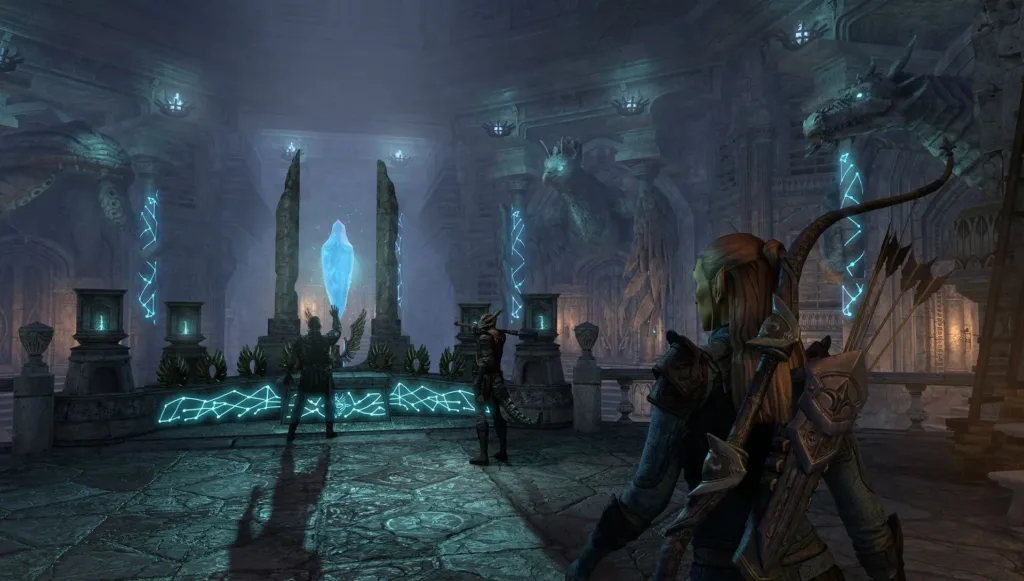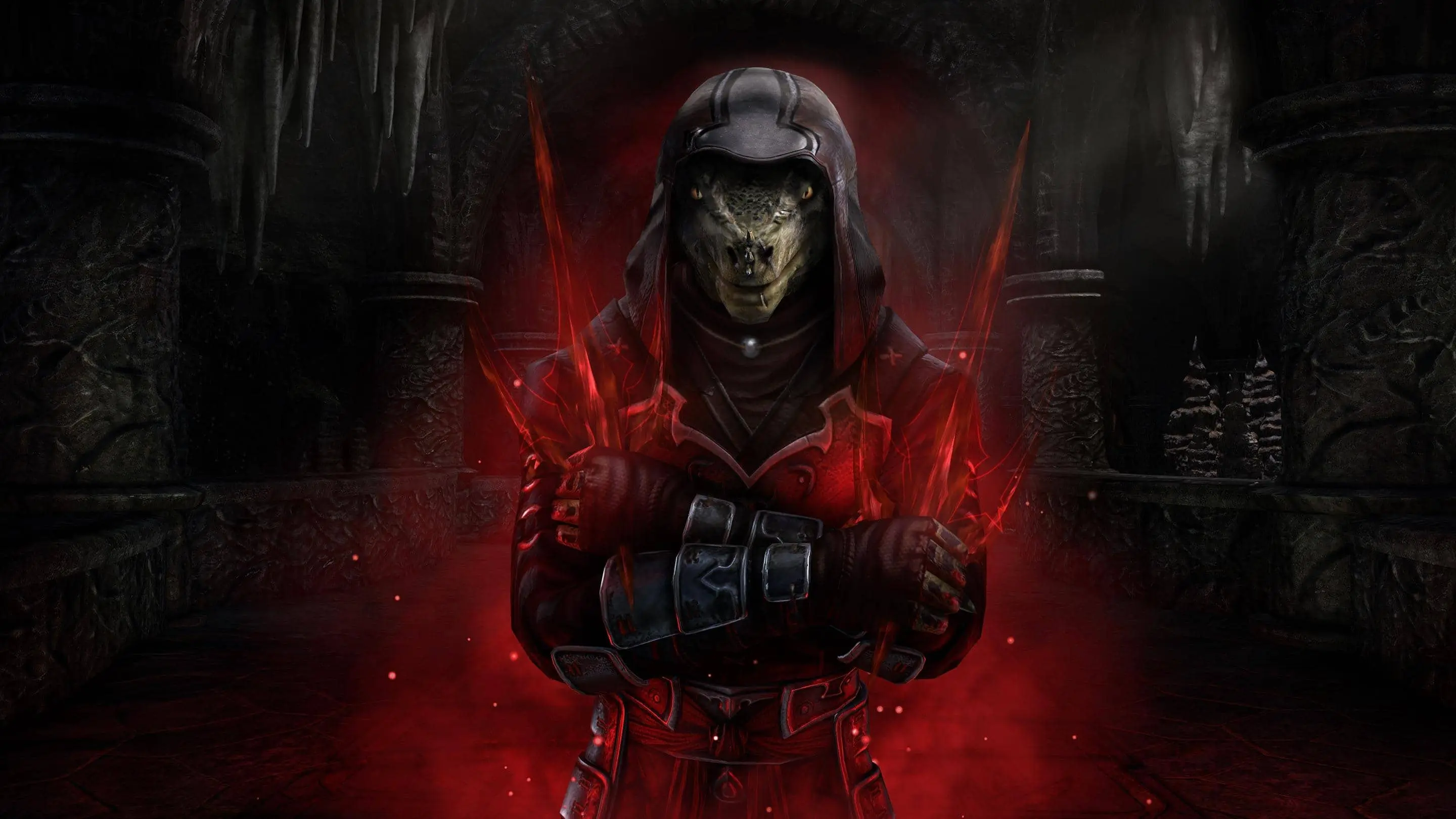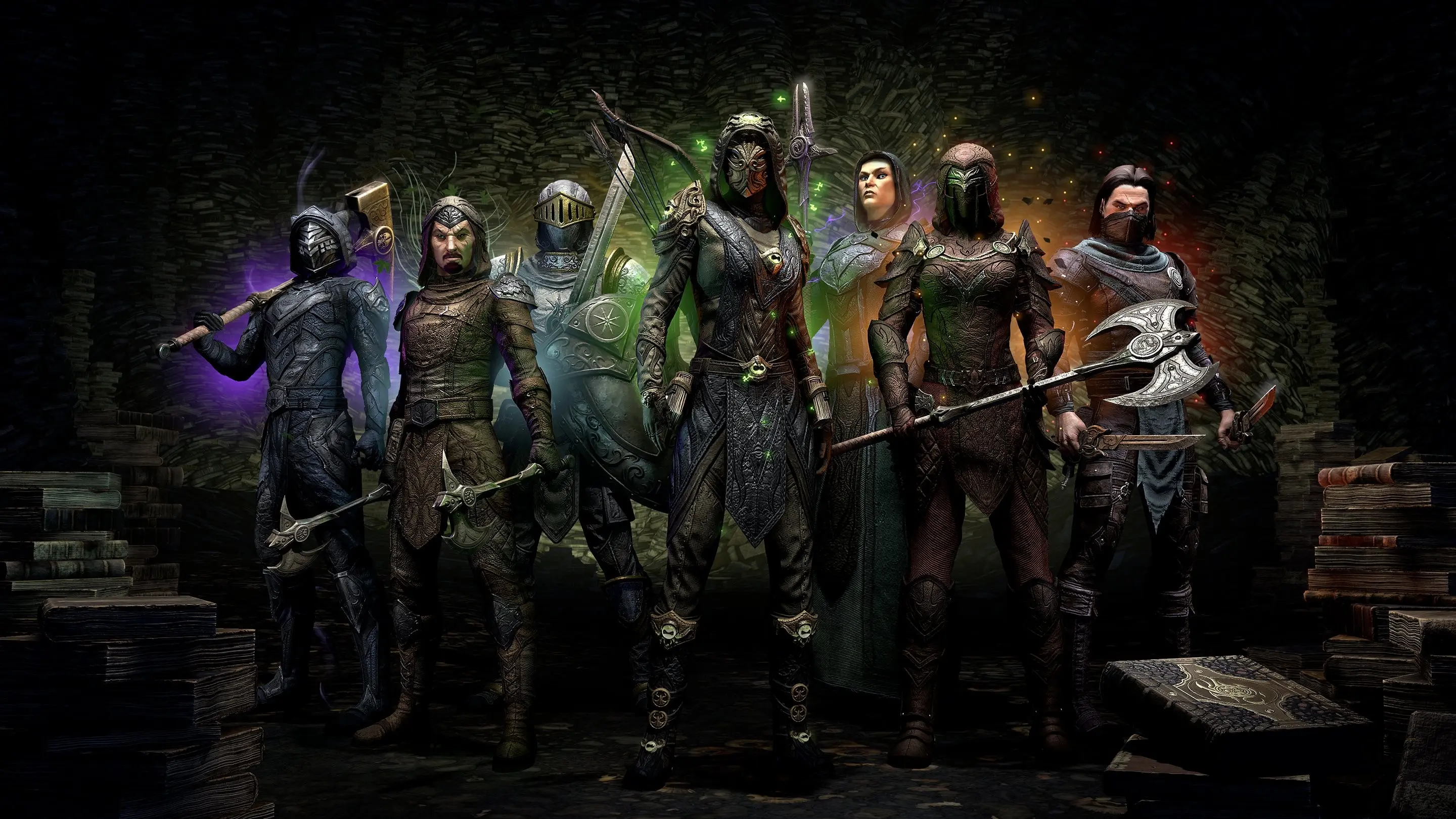










ESO Graven Deep Guide, ESO Dungeon Tank Build

ESO Dungeon Tank Build (2026) – Best Tank Setup for Veteran & Hardmode Dungeons

This ESO Dungeon Tank Build is designed for 4-player Veteran and Hardmode dungeon content across all tank classes. It covers core tanking fundamentals, gear choices, skill setups, scribed skills, and subclassing options to help you tank dungeons reliably in both organised groups and PUGs. The focus is on practical, adaptable dungeon tanking rather than rigid meta setups, ensuring the build remains effective as balance changes evolve.

Table of Contents

What This ESO Dungeon Tank Build Is Designed For

Tanking 4-player dungeon content in ESO is fundamentally different from tanking Trials. With only three other players in your group, every build choice can make a noticeable difference, and your tank setup has a far more direct impact on how smoothly a dungeon run plays out. Group composition also plays a major role, while a tank is always required, groups may run a traditional tank, healer, and two damage dealers, or push maximum damage with three DPS. Because of this, your tank build needs to be flexible, reliable, and easy to adapt to your group.

This ESO Dungeon Tank Build is designed to cover all tank classes, with setups that prioritise survivability, group utility, and consistency in Veteran and Hardmode dungeons. Unlike Trials, dungeon tanking allows for far more freedom in gear, skills, and playstyle, but that freedom also makes it easier to build inefficiently if you’re not careful.

With the introduction of Subclassing and Scribing, dungeon tanks now have access to more tools than ever before. This guide incorporates subclassing options and scribed skills where they make sense for dungeon content, while avoiding gimmicks or setups that rely on temporary balance outliers. Where subclassing strength differs between classes or may change over time, the core class toolkit remains the foundation of every build.

Whether you’re new to tanking or pushing Veteran Hardmode, No Death, and Speed Run clears, this guide is built to help you tank dungeons confidently, without overcomplicating your bars or forcing unnecessary systems into your setup.

Core Essentials

The Core Essentials section covers the foundational choices that apply to every ESO dungeon tank, regardless of class. These selections prioritise sustain, survivability, and consistency in 4-player dungeon content rather than raw Trial-style optimisation.

The Atronach Mundus Stone provides the most reliable value for dungeon tanking by increasing Magicka Recovery. Maintaining skill uptime is one of the biggest challenges for dungeon tanks, especially in longer pulls and boss fights, and additional Magicka Recovery allows you to cast important abilities more frequently without over-relying on heavy attacks or external support.

Red Frothgar is the strongest all-round dungeon tank food, offering increased Max Health alongside Magicka Recovery. This combination makes it ideal for most players and most dungeon scenarios.

Smoked Bear Haunch, or the cheaper alternative Jewels of Misrule, trades some Max Health and Magicka Recovery compared to Red Frothgar, for additional Health and Stamina Recovery. These options are best suited to experienced tanks who block less frequently and are comfortable managing incoming damage.

Bewitched Sugar Skulls can be used situationally when additional Max Resources are needed, but it is generally less efficient for dungeon tanking compared to recovery-focused foods.

The standard potion choice for dungeon tanking is Essence of Health (Tri-Stat) Potions, which restore all three resources and provide increased recovery across the board. These are reliable, flexible, and work well for every class.

Minor Heroism Potions are a strong alternative for experienced tanks, providing additional Ultimate generation. These are particularly valuable in organised groups or speed-focused runs where frequent Ultimate usage improves group damage or survivability.

Nord is the strongest overall race for dungeon tanking due to its bonus resistances, Max Stamina, and increased Ultimate generation. These benefits are universally useful across all tank classes.

For Arcanist tanks specifically, Imperial or Redguard can perform better due to their sustain-focused passives. That said, race selection is not mandatory, while Nord offers the best defensive advantages, dungeon tanking is fully viable on any race if you prefer to play something else.

Placing 64 points into Health is the most consistent and reliable choice for dungeon tanking across all classes. This provides a strong survivability baseline while allowing your other resources to be managed through gear, food, and recovery.

~40,000 Health
Aim for around 40k Health when fully buffed. You can run lower Health in easier content, but for Veteran DLC and Hardmode dungeons, higher Health provides far more breathing room and reduces the risk of sudden deaths.

~20,000 Stamina
Stamina is required for blocking, dodging, breaking free, and certain class skills. Around 20k Stamina is a comfortable baseline. More experienced tanks may run less if they block efficiently or have strong Stamina sustain through passives or skills.

~15,000 Magicka
Magicka is the primary resource used for most tank skills. A baseline of 15k Magicka is sufficient, as sustained casting is achieved through Magicka Recovery rather than stacking Max Magicka. Having significantly more Magicka provides diminishing returns for dungeon tanking.

25k–33k Resistances
Resistances reduce incoming damage from both direct hits and damage-over-time effects. The resistance cap is 33,100, but you do not need to be capped at all times.

  • Base game dungeons: Resistances are largely unimportant
  • Veteran DLC dungeons: Aim for 25k+
  • DLC Hardmode dungeons: Aim for 30k+

Resistances can be increased through skills and passives, Reinforced gear, a Defending one-handed weapon, or buffs such as Minor Resolve. Keep in mind that the more you block, the less value resistances provide due to block mitigation, resistances matter most when taking unblocked damage or sustained DoTs.

~2,000 Magicka Recovery
To maintain consistent uptime on buffs and debuffs, dungeon tanks should aim for around 2,000 Magicka Recovery. Some classes can function with slightly less due to alternative sustain tools (such as Dragonknights gaining resources through Ultimate usage), but dropping below this value will noticeably impact uptime and survivability.

Role & Expectations

The role of a tank in ESO dungeon content is simple at a glance, but becomes far more nuanced as you move into Veteran, DLC, and Hardmode dungeons. While the fundamentals stay the same, higher-level play demands stronger positioning, better timing, and a deeper understanding of group optimisation.

During add pulls, your primary responsibility is to move ahead of the group, pull enemies together, and stack them tightly. This allows your damage dealers to maximise AoE damage while you apply crowd control and debuffs to reduce incoming damage and speed up each pull.

Boss fights shift your focus significantly. You are responsible for maintaining taunt at all times, handling boss-specific mechanics, managing any additional enemies, and keeping key debuffs active. At the same time, you’re expected to provide group buffs and utility that improve overall damage output, all while maintaining your own defensive buffs and survivability.

Effective dungeon tanking also relies heavily on ultimate timing. Many of your strongest group buffs and enemy debuffs come from skills, passives, and gear sets with differing cooldowns. Learning to align these effects and use your ultimate during high-impact windows is what separates a competent dungeon tank from a great one.

ESO Scrivener’s Hall Dungeon Riftmaster Naqri
Riftmaster Naqri Boss in ESO's Scrivener’s Hall Dungeon

Classes

In the current state of ESO, class rankings for dungeon tanking are less rigid than they once were. Subclassing and Scribing allow tanks to cover many weaknesses by borrowing tools from other classes, making raw class comparisons less meaningful than in the past.

With that in mind, the comparison below focuses on each class without subclassing, based purely on their core toolkit. This gives a clearer picture of how each class performs as a dungeon tank at baseline. As subclassing strength is gradually reduced throughout 2026, these distinctions are expected to become more relevant again over time.

Gear

Monster Sets
Archdruid Devyric is one of the strongest monster sets for dungeon tanking, providing excellent Major Vulnerability uptime, especially when paired with Turning Tide. This combination is particularly effective on bosses. For add pulls, Archdruid is less impactful, making Spaulder of Ruin a better option for consistent group damage. Tremorscale is another strong alternative, especially in groups that benefit from additional armor reduction.

With a Healer in the Group
When running with a dedicated healer, tanks can focus more heavily on offensive group buffs. War Machine provides Major Slayer through Ultimate usage and pairs extremely well with Saxhleel Champion, which grants Major Force. Both sets scale naturally with Ultimate uptime, allowing tanks to align their ultimates with high-damage windows for maximum group DPS.

Without a Healer in the Group
Without a healer, the tank must cover more essential buffs. Turning Tide becomes a core set, greatly improving Major Vulnerability uptime. This is typically paired with Olorime for Major Courage or Powerful Assault for increased Weapon and Spell Damage. Olorime is easier on sustain but can be awkward to place consistently, while Powerful Assault is easier to apply at range but more resource-intensive. Turning Tide’s Heavy Armor weight also makes it easier to pair with non-heavy sets.

Weapon Sets
For add pulls, Void Bash (Vateshran One-Hand and Shield) is best-in-slot, allowing you to stack entire packs with a single cast. For boss fights or encounters with minimal adds, equipping 2 Pieces of the Trainee set just adds some extra Max Health and Magicka.

Traits, Jewellery & Enchantments
Divines is the default armor trait for dungeon tanking, providing improved Magicka Recovery. Reinforced can be used for difficult Veteran Hardmodes, though most tanks can reach the resistance cap through Champion Points and Resolve buffs. Sturdy is a viable alternative for Arcanists who frequently overcap resistances or block heavily.

Harmony jewellery with Magicka Recovery performs best in most situations. Prismatic Cost Reduction is useful if you rely heavily on Stamina skills, while Infused jewellery can be used when synergies are less frequent. Players using gear-swap addons may also benefit from Swift jewellery during add pulls.

For weapons, a Decisive or Absorb Stamina One-Handed Weapon is a strong option. An Ice Staff with Charged excels during add pulls by reliably applying Chilled, enabling multiple buffs and debuffs. For bosses, switch to an Infused Ice Staff with Crusher for maximum debuff uptime.

Alternate Gear Options

While the gear setups shown earlier represent the most commonly used options for dungeon tanking, the performance difference between these and many alternative sets is often very small. In 4-player content, your gear is typically buffing only two or three damage dealers, which means small variations in set choice rarely make or break a dungeon run.

This gives dungeon tanks a lot of freedom. Many different gear combinations provide comparable group benefits, allowing you to mix and match two 5-piece sets, a monster set, and a weapon set while still delivering strong buffs, debuffs, and utility. In practice, the most important factor is choosing sets that fit your group composition and playstyle, rather than strictly following a single “best” setup.

Below is a list of viable gear options for dungeon tanking. These sets all perform well when used correctly and can be swapped depending on whether you’re running organised groups, pick-up groups, or healerless compositions.

  • Turning Tide
    One of the strongest dungeon tank sets, offering excellent Major Vulnerability uptime. It is available on every add pull and provides roughly 66% uptime on bosses, making it a reliable choice in almost any dungeon.
  • Vestment of Olorime
    A powerful group damage buff set, best used when your group does not have a healer providing Major Courage.
  • Powerful Assault
    Provides strong offensive buffs but requires more micro-management. It is effective when applied consistently, though more demanding than Olorime.
  • Pearlescent Ward
    Ideal for progression groups and PUGs. It increases group damage and provides damage reduction when group members die, helping stabilise messy runs. No micro-management is required, and uptime is guaranteed.
  • Drake’s Rush
    Best suited to organised groups. This set can outperform Yolnahkriin and rival Powerful Assault, but only if group members use their ultimates on cooldown.
  • Crimson Oath’s Rive
    Very useful in dungeons where penetration is lacking. A good option for newer tanks or less optimised groups, especially if Crusher uptime is inconsistent.
  • Lucent Echoes
    Functions almost like a tank-focused version of Elemental Catalyst, increasing group Critical Damage and healing with minimal effort.
  • Claw of Yolnahkriin
    Less common in dungeons and generally outperformed by newer options, but still usable. Not effective when running with Oakensoul damage dealers.
  • Saxhleel Champion
    A solid defensive set that allows safe use of Barrier ultimates while also providing a group damage buff. Particularly strong for Necromancers using Colossus to supply Major Force.
  • War Machine
    Effective in high-DPS groups that can burn bosses quickly. Best used exclusively on boss fights rather than general dungeon clears.
  • Archdruid Devyric
    Excellent for bosses, providing near-permanent Major Vulnerability when paired with Turning Tide. Less effective for add pulls.
  • Tremorscale
    A strong option for groups running Medium Armor, where penetration is often lower.
  • Nazaray
    Extremely powerful when timed correctly alongside Major Vulnerability, Minor Vulnerability, and Minor Brittle, extending debuff uptimes significantly.
  • Symphony of Blades
    Useful in healerless groups to support sustain, though it requires an AoE healing skill to fully benefit the group.
  • Engine Guardian
    The best option when personal sustain is the priority.

Most dungeon tank gear setups only require one bar, allowing you to slot a weapon set for additional value:

  • Puncturing Remedy (Master’s One-Hand and Shield)
    Best for boss fights, providing extra resistances and a strong self-heal when using Puncture.
  • Void Bash (Vateshran One-Hand and Shield)
    Best-in-slot for add pulls across all classes. It allows you to stack entire packs instantly, apply debuffs efficiently, and reduces reliance on skills like Silver Leash or Unrelenting Grip.

Mythics are optional, but one stands out for dungeon tanking:

Spaulder of Ruin (paired with 1-piece Magma Incarnate)
The most useful Mythic for dungeon tanks. Excellent on add pulls and still effective on bosses, though it does not outperform Archdruid Devyric or Nazaray in boss-focused setups, and it does not provide penetration like Tremorscale.

Subclassing & Scribing Explained

Subclassing and Scribing have become a major part of ESO tank builds, particularly in dungeon content. Subclassing allows you to unlock skill lines from other classes, giving you access to additional buffs, debuffs, and utility that your base class may lack. Scribing expands this even further by letting you customise specific skills, allowing you to fine-tune their effects to better suit dungeon tanking.

Together, these systems give dungeon tanks an enormous amount of flexibility. You can cover group buffs, enemy debuffs, sustain tools, and defensive utility in ways that were previously locked to specific classes. This makes it possible to create highly specialised tank builds that perform well across a wide range of dungeon scenarios.

The downside to this flexibility is a loss of clear class identity. ESO’s developers have already stated that subclassing strength will be reduced over time, starting with Dragonknight and continuing through other classes during 2026. As this happens, base class toolkits are expected to matter more again. That said, tanking as a role is still heavily focused on buffing allies and debuffing enemies, meaning subclassing is likely to remain relevant for dungeon tanks even as balance changes roll out.

For this guide, subclassing is treated as a powerful but optional layer. Core class skills remain the foundation of every setup, with subclassing and scribed skills added only where they provide clear, practical value in dungeon content.

Current Meta Subclassing Options

Earthen Heart

Soldier of Apocrypha

Winters Embrace

The following subclass skill lines are currently the most popular and effective choices for ESO dungeon tanking, providing strong group utility, survivability, or sustain.

Other commonly used subclass options include Necromancer’s Bone Tyrant, Warden’s Arctic Embrace, Nightblade’s Soul Siphon, Templar’s Restoring Light, and Sorcerer’s Daedric Summoning, depending on class, group composition, and playstyle.

For a detailed explanation of ESO subclassing for tanks including how it affects dungeon builds, which skill lines are worth using, and how upcoming balance changes may impact tanking – see our ESO Subclassing Guide for Tanks.

Skills​

Arcanist Skills

Earthen Heart

Soldier of Apocrypha

Winters Embrace

ESO-Hub Skill iconESO-Hub Skill iconESO-Hub Skill iconESO-Hub Skill iconESO-Hub Skill iconESO-Hub Skill icon

Dragonknight Skills

Earthen Heart

Soldier of Apocrypha

Winters Embrace

ESO-Hub Skill iconESO-Hub Skill iconESO-Hub Skill iconESO-Hub Skill iconESO-Hub Skill iconESO-Hub Skill icon

Necromancer Skills

Soldier of Apocrypha

Bone Tyrant

Winters Embrace

ESO-Hub Skill iconESO-Hub Skill iconESO-Hub Skill iconESO-Hub Skill iconESO-Hub Skill iconESO-Hub Skill icon

Nightblade Skills

Soldier of Apocrypha

Siphoning

Winters Embrace

ESO-Hub Skill iconESO-Hub Skill iconESO-Hub Skill iconESO-Hub Skill iconESO-Hub Skill iconESO-Hub Skill icon

Sorcerer Skills

Soldier of Apocrypha

Daedric Summoning

Winters Embrace

ESO-Hub Skill iconESO-Hub Skill iconESO-Hub Skill iconESO-Hub Skill iconESO-Hub Skill iconESO-Hub Skill icon

Templar Skills

Soldier of Apocrypha

Restoring Focus

Winters Embrace

ESO-Hub Skill iconESO-Hub Skill iconESO-Hub Skill iconESO-Hub Skill iconESO-Hub Skill iconESO-Hub Skill icon

Warden Skills

Earthen Heart

Soldier of Apocrypha

Winters Embrace

ESO-Hub Skill iconESO-Hub Skill iconESO-Hub Skill iconESO-Hub Skill iconESO-Hub Skill iconESO-Hub Skill icon

Scribed Skills

The Scribing system adds a powerful layer of flexibility to dungeon tanking, giving every class access to tools that were previously limited or inconsistent. For dungeon tanks, this means easier access to ranged taunts, reliable pulls, immobilisation effects, and additional group buffs, all without relying on class-specific gaps or niche weapon skills.

This is particularly valuable for classes that previously depended heavily on Silver Leash or lacked strong crowd control options. Scribed skills also offer meaningful defensive and sustain benefits, allowing tanks to stabilise pulls more quickly and maintain higher uptime on key buffs and debuffs throughout a dungeon run.

The following scribed skills form the core of this dungeon tank setup:

Goading Throw
(Shield Throw · Taunt · Sage’s Remedy · Maim)
Provides a ranged taunt that also applies Major Maim, reducing enemy damage output. The built-in self-heal improves survivability during add pulls and boss mechanics, making this a reliable and efficient taunt option for dungeon tanking.

Leashing Soul
(Wield Soul · Pull · Druid’s Resurgence · Cowardice)
A Magicka-based pull that restores both Magicka and Stamina while applying Major Cowardice to enemies. This skill replaces the need for Stamina-heavy pulls like Silver Leash, improving sustain and making add control smoother across all classes.

Warding Burst
(Soul Burst · Damage Shield · Anchorite’s Potency · Courage)
Provides a group damage shield while generating Ultimate every 5 seconds through Soul Gem consumption. It also grants Minor Courage to the group, making it a strong utility skill for both survivability and group damage in dungeon content. 

Champion Points

Warfare
Fitness

How To Play

Add Pulls

  1. Use speed boost (Race Against Time) to stay ahead of the group.
  2. Instigate combat with Frost Blockade.
  3. If there are any Elite enemies, taunt those next.
  4. Cast Razor Caltrops in front of the enemies for them to walk onto it, this snares them and activates your Powerful Assault.
  5. Hit Power Slam when all enemies are within range to pull them all into a stack with Vateshran Void Bash Set, then use a crowd control skill to immobilise.
  6. Bash while facing the whole stack to proc Turning Tide.
  7. Cast Pulsar to AoE debuff enemies, cast multiple times to make sure they are all effected.
  8. Chain in any enemies you missed with Power Slam.
  9. Heal/Shield as and when its needed.
  10. Only block heavy attacks from enemies.

Bosses

Boss fights are less rotational than add pulls, with significant differences between classes and additional mechanics. Generally speaking, we can consider a guideline set of things to do:

  1. Pre-buff: Before initiating combat, activate any pre-fight skills, especially those providing Major and Minor Resolve.
  2. Initiate: Begin the fight once everyone is ready. Use a Frost Clench range taunt to gain aggro and debuff the boss.
  3. Positioning: Proper positioning is crucial. Typically, you need to face the boss away from the group. In some cases, you may need to move the boss to the middle of the room or closer to the edge. Sometimes, you may need to walk the boss to another location if something spawns in a specific spot.
  4. Mechanics: This part varies by dungeon. Be prepared to block, roll dodge, taunt adds, move out of AoEs, self-heal, run around, or avoid effects. Stay alert and adapt to the unique mechanics of each dungeon.
  5. Rotation: In a settled state, focus on casting your essential skills. Use Pierce Armor, Frost Clench, Elemental Blockade, and other gear set procs. Activate any class-specific buffs and debuffs. Watch your ability timers and recast skills when they have 1 second remaining. Frost Clench, for example, can be cast every 5 seconds to maintain Major Maim and Minor Brittle on the boss.
  6. Survival: Stay aware and reactive. Block heavy attacks and mechanics, shield up before big hits, use healing over time, and burst heals when below 30% health. Break free and interrupt when necessary. Roll dodge to evade damage if needed, but be cautious of bosses that may enrage or harm the group if dodged.
  7. Sustain: Ensure your food buff is active. Use potions to enhance recoveries and provide resources, either on cooldown or in emergencies. Avoid blocking permanently; if you’ve followed this build, you should be able to take light attacks without blocking, especially with a healer or healing over time. Utilize skills and passives to gain resources. As a Dragonknight, use your Ultimate or Igneous Shield to return Stamina. Heavy Attacking also returns resources but time it carefully to avoid getting hurt.

How to Get the Most Out of This Build

The key to successful dungeon tanking in ESO isn’t copying a single setup, it’s understanding when and why to adapt. This build provides a strong foundation that works across all tank classes while giving you the freedom to adjust gear, skills, and utility based on your group and the dungeon you’re running.

Use the recommendations in this guide as a framework rather than a rulebook. As long as you’re stacking enemies cleanly, maintaining debuffs, and supporting your group’s damage, you’ll be doing your job as a dungeon tank regardless of minor balance shifts.

TC Lee
TC Lee is an experienced MMORPG content creator with over 20 years in the gaming industry. Specializing in tanking, guides, builds, and assisting beginners, TC Lee is dedicated to helping players improve their game and enjoy the best MMORPG experience.
Trending Now
Watch Us on YouTube

Never Miss another MMO Build

Join our Discord server to get access to fresh Beginner Guides, Tanking Strategies & Builds, In-Depth MMO Reviews, and Exclusive Beta/Alpha Testing Insights from The Tank Club.

More GoodReads

Project Gorgon
TC_Lee13

Project Gorgon Staff / Shield Tank Build (2026)

This Project Gorgon Staff / Shield Tank Build is a reliable, endgame-ready setup designed for group dungeons and elite content. Covering skills, gear, and optimised mods, this guide focuses on strong mitigation, self-healing, and consistent aggro control, making it ideal

Join Our Discord

And become part of The Tank Club community